
Scoundrels Philosophy Club, Wednesday, November 4 · Saturday Scoundrels, Saturday, November 7
Hey everyone, Seth here again. Gad handed me the pen for a second week in a row, but this time I had her careful notes to work from (along with a little of my own paraphrasing), which made the job a whole lot easier than piecing things together from a recording. Our question for both sessions was "Is there a relationship between sports and religion?"
Wednesday at Bridge & Tunnel was a big night: 21 of us around the tables (23 if you count me and Gad, and you know I do). A warm welcome to Rebecca, who joined us for the first time. Then on Saturday at The Catalyst we had a quieter affair, six of us with our coffee. And Thom, our resident double-dipper, made it to both. Thom, by the way, will be giving us this week's Hot Take.
The two conversations took very different shapes. Wednesday spent a lot of time watching from the stands: fans, faith, tribes, and heroes. Saturday mostly stepped out onto the field: practice, discipline, competition, and war. Because of their different trajectories, I'm going to take them one at a time, and then bring them back together at the end.
Four Parallels
I started both sessions the same way. I laid out four parallels that seem to run between sports and religion:
They both operate within a ritualization of space and time.
They both pursue and cultivate a flow state, a kind of ecstasy or transcendence.
They both grow through the cultivation of moral virtues as well as an appreciation of asceticism (the disciplined giving up of comforts for the sake of something higher).
They make great use of a teleology, which is a philosopher's way of saying a sense of purpose, an end that things are aimed toward. (From the Greek telos, meaning end or goal.)
While all four seem to show up in both, they raise a lot of questions. Where and how do these connections exist? Are they in culture, in the imagination, in expression, or somewhere else entirely? Is there an ethical dimension to connecting sports and religion, something we should or shouldn't do? Are the parallels real and meaningful, are they two parts reflecting some larger reality, or are they just circumstantial and coincidental? And why do we go looking for these connections at all? Does knowing about one tell us something about the other?
WEDNESDAY: From the Stands
Tribe and Sunday
Chani got us rolling. She pointed out that there are lots of connections already built into sports from religion. Many of the rituals around sports were designed in religious contexts, and star players can take on a quasi-heroic status. She also noticed a chicken-and-egg problem in even talking about the relationship: which came first, and which shaped which? And she made the point that sports are, in some ways, more accessible than religion. Plenty of people don't care about religion at all, but they can still enjoy sports, and the emotional range of the two can be strikingly similar.
I asked whether that made sports an extension of religion. Chani thought so. She has friends in Glasgow who identify with their football team specifically because of the religious community it's connected to. (For the uninitiated, Glasgow's two great rival clubs, Celtic and Rangers, have long been associated with Catholic and Protestant communities respectively.) She'd heard of this happening in other places as well.
Tim came at it from the other direction. Religion, he said, forces us to grapple with death and with ontology (the study of what exists and what it means to be), and it defines ethical systems. Therefore, there's really no overlap between religion and sports, except (and he said this with emphasis) in identification with a tribe. Both religion and sports promote tribal identification, and attending and participating in either builds connections within the tribe, along with a sense of identity. I asked if building tribes, as such, might build into other aspects of human life and values as well. Tim didn't think so.
Eric picked up the tribal thread. Both, he observed, have a strong us-versus-them element. On one hand, this can make for incomparability between religion and sports. For instance, religion in theory speaks of the oneness of humanity, while in sports there's no deviating from your allegiance and no sense of oneness with the other side. At the same time, though, sports create a bond that brings about a kind of oneness within the immediate group that does reflect religion’s sense of oneness. Eric is from Cleveland, where everyone finds a way to love the Browns, and it's in finding that love together that people come together in a way that's analogous to religion. I wondered whether there might be something larger in this, something like the love of the game itself. Eric thought so, but only if people can disassociate from their own team.
Even though I didn’t mention it, I wondered whether a fan who simply came for “the love of the game” might be reflective of the seeker or saint within a religious tradition - a reformer like St. Francis of Assisi or Rābi’a ‘al-Adawiyya, the founder of Sufism in Islam. It wouldn’t be equivalent, obviously. But the motivations might, perhaps, operate under the same lines of analogous reasoning.
Jim spoke to the role of spectators, and the way they take part in the back-and-forth of the game being played. Given his experience growing up Catholic, this wasn’t what he had found religion to be like personally. That being what it is, he still thought both reflected the tribal alignment Tim had pointed to.
This reminded me of caring as an existential act that is performed in both. When we care about a team or a faith, there’s a way we are dialte our sense of identity and identification. Are both a way of stretching our sense of who we are to take in something bigger?
Annie talked about growing up a Buffalo Bills fan, and the way the team, and especially its rituals, gave people a cultural landing spot to return to. Faith in the Bills, even through the repeated Super Bowl defeats of the 90’s and the sometimes lackluster seasons thereafter, preserved a shared cultural space even as so many other things changed. Religion used to do that for people, she noted, though not nearly as much in the modern era. Chani echoed this. Sports may have taken the place of religion in preserving spaces where people share ritual, belief, hope, and faith. She told the story of a friend who found a community of rugby fans after a particularly hard breakup. It was, for him, both a reinvention of himself and an antidote to alienation.
Jane noticed that the rituals of both sports and religion stretch and change our sense of time psychologically, but they also make practical demands on our time. And interestingly, in our culture, both tend to land on Sundays. When we don't preserve space for that kind of time practically, we lose a lot of what it protects, most notably a sense of family and community. We also lose the fullness of the sense of time that both sports and religion brings with it when we participate in it.
The Faith of the Fan
Don noticed that sports and religions organize themselves in surprisingly similar ways. Penalties and purgatory, for instance. Or the weight fans put on their team winning a championship, which he compared to eschatology, the part of theology concerned with the end of things: final judgment, the last days, what it all comes to. Maybe it's this shared way of organizing that lets us draw so many parallels. Jo added that the classical Greek word often translated as "sin" (hamartia) is the word for missing the mark in the sport of archery.
Peter thought different kinds of sports might relate to religion differently. In solo sports, there's endurance, and a kind of ecstasy that comes through struggle and perseverance. In team sports, a whole world gets created that players try to achieve excellence within, while following a set of "sacred rules" along the way. Fouls and penalties can look a lot like sin, and there's something almost eschatological about a referee announcing that the match is over.
Strand brought in the existential thread with Kierkegaard's "leap of faith," which Kierkegaard saw as the essential move in one’s authentic engagement with religion. (His famous example is Abraham's willingness to sacrifice Isaac, a commitment that can't be justified by reason alone.) Is there something like that in the devotion fans bring to their teams, a way of becoming part of something larger by giving yourself over to it? Can a fan make that leap the way a believer does? Or, as Kierkegaard might have it, can that kind of existential commitment only happen once a person reaches what he called the religious stage of existence? And could sports ever get there?
Matthew brought up the place of hopeless causes in this comparison: the Browns, the Bills, the Vikings. Teams whose championship you might never see in your lifetime. And yet, the belief that it could happen seems to inspire even more faith and hope. He also saw that having a team to root against can bring a group together in its identity and imagination, too. I suggested that one of the great strengths of both sports and religion might be exactly this: they put us in a position to imagine a world that doesn't yet exist, and still treat it as real, and organize ourselves toward it. Malachi put it memorably. Maybe humans have "a meaning-shaped hole" inside of us, always shifting, always looking to be filled, and both sports and religion provoke our imaginations to try to fill it, in ways that are comparable but still distinct.
So, what happens when the impossible is finally achieved? When the Cubs won the World Series did it become a crisis for the faithful, or an opportunity for them to reconsider and reconstruct the architecture of their fan-faith? Matthew made a joke about a Bills fan being reincarnated into a Patriots family, which is about as paradoxical as fate gets. Jane talked about the continuity of tradition, like inheriting your parents' stadium seats. Overall, though, there was a feeling that it could be an opportunity for deep creativity, a reinvention of what one has faith in and lives for. The challenge is whether that creative opportunity gets realized, or whether it slides into meaninglessness and even despair. To me, had some parallels to parts of Joseph Campbell's hero's journey, and the way that the stories we tell about athletic triumph very often follow many of the contours of that path.
Tim wasn't convinced by the numerous parallels that had been drawn. This had as much to do with our language as with the connections themselves. Our definitions of "faith" were messy, he said, which made the connections to religion weaker than they felt. Religion seems to work from a completely different axiom than sports, largely because of the role of belief. In the end, he saw only two real points of comparison: the tribalism both encourage, and the rituals and rites both organize themselves around. I pointed to how hard it is to separate faith from belief in the first place. Over the past thousand years, the way those two words - “belief” and “faith” - have been used in English has almost switched places, with much of the switch happening around the Protestant Reformation. So the terms are messy because they keep informing one another, especially when we bring something from outside of religion, like sports, into the picture.
Heroes and Watchers
Thom observed that sports give us vivid examples of excellence, to the point where winning becomes everything. In that way, sports come very close to religion in their all-encompassing character. That made me think of a passage I'd brought along from the Greek poet Pindar, from an ode he wrote for a young wrestler, Nemean 6.
"There is one race of men, one race of gods; and from a single mother we both draw our breath. But all allotted power divides us: man is nothing, but for the gods the bronze sky endures as a secure home forever. Nevertheless, we bear some resemblance to the immortals, either in greatness of mind or in physical nature..." (trans. Diane Arnson Svarlien)
In short: It is true that humans and gods are fundamentally different on a cosmic scale. And yet, even though we can never know what fate has set down for us, we can still strive and excel in a comparable way to the gods, in the efforts of both our minds and our bodies. That poem is about 2,500 years old, and it already holds this connection between athletic excellence and our aspirations toward the divine.
Annie said she very much saw things differently from Tim regarding the gap between religion and sports. There's a long history of humans playing sports for explicitly religious reasons. The Mesoamerican ballgame pok-ta-pok is a famous example, which may have ended with a sacrifice to the gods. Annie lifted up how the winners were sacrificed (whether it was the winners or the losers who were sacrificed is still debated by scholars). And even today, athletes point to the sky and clutch their chests after a big moment, in what looks like a nod to deep religious devotion. She also wondered whether the intensity of physical activity itself might be part of the connection, and offered ecstatic religious dance as an example.
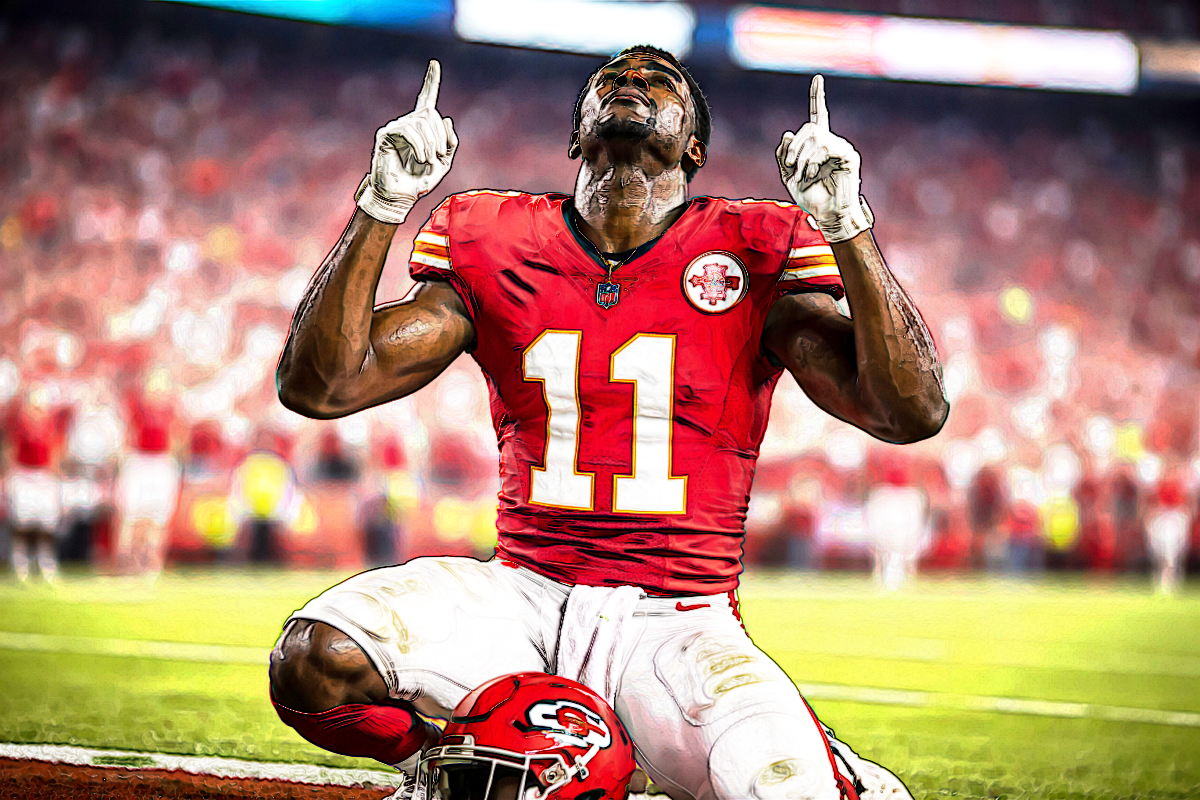
I asked why intense physical activity would be so connected to the spiritual. Annie thought that pushing yourself to physical limits, to exhaustion or duress, puts a person in a position to encounter reality in a more spiritual way. That's true in explicitly religious practices too. In many Indian traditions there's a practice called tapas (literally "heat" in Sanskrit): austerities taken on for purification and mental clarity.
Ariane pointed out that France, which is officially secular, invests a great deal in sports, in part to help people channel energies they might otherwise express through religious passion. It's a way of keeping the peace, or at least of giving society a release valve for all kinds of social and psychological pressures. Malachi chimed in saying that's exactly why he runs: as a release valve for pressures he feels inside. It isn't competitive, but it's expressive, and it helps him strive to be better even as it eases the pressure.
Tim returned to Annie's point. He was again confused by the group’s varied use of definitions; in this case because he didn't consider dance a sport. He understood how physical exertion could play a role in spiritual life, but he said, that's different from an actual sport. This is the point where Tim did concede that he could now see the element of ritual in both religion and sports, something he hadn’t allowed for at the beginning of the conversation. Nevertheless, he thought this was where the connections ended. And, he added, it was important to not go too far with the connections because it is degrading to describe religion in terms of rules the way you might describe sports. Sports, he thought, are about the rules and only the rules. Religion has rules as a way of enforcing and realizing values.
Matthew noticed that we hold athletes to higher standards, sometimes in ways that seem unfair. He brought up Charles Barkley's famous line that it isn't his job to raise your kids. And we do something similar with pastors. Is there a way, he wondered, that we almost unconsciously associate the skillful with the ethical and the spiritual? And if so, why? Eric said this happens with more than athletes. Look at artists, like Ezra Pound, and the way he was condemned for his politics in the middle of the twentieth century. To this I wondered aloud whether people imitate artists as much as they do athletes. Maybe sometimes, I said, but perhaps not as much (there was some murmuring around the table on that). Maybe athletes have something over artists in that their achievements can make people feel bigger.
Ariane brought up the heroic in both. Athletes practice with extraordinary intensity and devotion, and she saw parallels in the moral and spiritual rigor of the seventeenth-century Jansenists, a strict Catholic reform movement in France. Most people couldn't practice their faith with that kind of intensity, but they admired it as a kind of heroic devotion nonetheless. Maybe we look at athletic greats with that same sort of idealized admiration.
Ariane also found it striking that some of the places where sport and religion are most obviously tied together in the modern world, bullfighting for instance, have to do with proximity to death, and the skill it takes to survive it. Given the enormous existential risk being put forth by the bullfighters, might this also be an example of the idealized devotion that we can’t hope to achieve ourselves but admire in others? Might it be a place where the idealized devotion of the athlete and the religionist actually share a space beyond analogy?
And Eric closed out the evening thinking about ego, and how certain moments in both sports and religion lift it up, while others diminish it. He played ultimate frisbee in college for a small liberal arts school, and they once played the University of Oregon's powerhouse team. Oregon kept putting in its best players, even while clobbering them, while Eric's team let everyone play just for the experience of playing. Eric told his father about the experience, and his father shared a connection between this experience and his own work as a pastor. Eric's father talked about the movement toward megachurches over the last few decades and the way they can lift up ego in stark contrast to the humility, community, and sacrifice that defined the small local churches he served. In both cases there seems to be a back-and-forth between inclusion and exclusion, maybe another dynamic at work in both religion and sports.
Meanwhile, Saturday Morning
From the Field
Competing With Yourself
Dave began by drawing a distinction between competitive sports, like football and basketball, and non-competitive ones, like surfing. Perhaps, he proposed, the two connect to different sides of religion: surfing, with its focus and attention, to the sacred, and the competitiveness of football and basketball to the profane.
Thom asked what "profane" meant in this context. It's a word that comes to us through the philosopher and historian of religion Mircea Eliade, who distinguished between the sacred and the profane. The profane refers to the everyday, mundane side of the physical world, the part that gets messy and dirty and complicated precisely because it's physical and imperfect. Dave added that it's possible to find the good in competition too. Competition can be uplifting. It just isn't always.
Sara brought up “flow” as an integral part of certain athletic activities, especially in martial arts and Qi Gong. Practices like these, especially when they're done outside in nature, can bring a person into an attentive, dynamic engagement with the larger world, a kind of "flow." In that sense it’s not that there are comparisons between sports and religion. Rather, it’s that they become religious activities almost by default. She also noted that competition can sometimes be a catalyst for growth, a way of driving us toward becoming more of who we'd hope to be.
I asked what draws us toward competitiveness versus non-competitiveness in these settings. Dave wondered whether competitiveness, in both sports and religion, driven by a search for some kind of consensus?
Ethan pointed out that there are plenty of sports where you compete with yourself, like wall ball. It is the simplest game, he said, and yet the amount of energy he could put into improving himself and the scores he kept as a kid was extraordinary. I added that I could relate. When I swam competitively, much of the competition was really with myself. While I certainly loved to race, and especially the feeling of pulling ahead of someone I was racing in the lane over, it wasn’t my main motivation. I wanted to be faster than I had been. In fact, it seemed to me that if you needed to compete with another person to go fast then you were missing something as an athlete. And this, in turn, was something Ethan could relate to.
Taking Life, Giving Life
Ethan then moved on to martial arts, sometimes referencing his experiences with Aikido. They can be used to hone oneself, he said, but they also have the power to bind people together in a common vision, focusing everyone's energy toward shared ends, very much the way war can. Early religions took this for granted, which is why sport so often fell within their purview.
He went on to say that sports, religion, and war are all shaped by the values of their time. In his studies of aikido, he’s come across a teaching about the nature of the sword: it can be used to "take life" or to "give life." The taking of life reference is the more obvious of the two, but it was also seen as the more external and superficial one as well. It was in the “giving life” where the deeper achievement was to be had. It referred to one who had such mastery and control of the sword, and so of oneself, that there was never any need to fight at all.
There was some discussion here about how warriors in ancient cultures were often described as athletes, and held to the same obligations and devotions as someone performing athletically in a sacred ritual. We reflected here that maybe religion, sport, war, and discipline are all facets of some larger truth. Just what that truth is remains a mystery. Then again, perhaps it’s the mysterious aspect of the experience within athletic striving that drives us to continue doing it, and how it is so intimately related to the pursuit of religious experiences and truths. We also thought it may also be why we go looking for it in so many elaborate ways.
Sara pointed out that this is especially salient when it comes to the history of war as a connection between religion and sports. She remarked that war was structured very differently not that long ago. While it’s true people were gravely injured and died, war was often understood as a deeper struggle within existence itself; sometimes one lifted up as sacred in and of itself. Today's advanced weapons abstract both struggle and death, so the ritual side of war is muted to the point of seeming almost absurd, and with it, war's old ties to both religion and athletics.
I suggested that the rules and ritual actions of games, of struggles, and of religious rites are all tied to an attempt to give them coherence. Maybe they help us articulate a teleology, a sense of what we hope to move toward in the world. And, I went on, perhaps it's in that teleology that we might find something like a religious vision. Ethan proposed that sports might channel energies in peacetime that would otherwise go into war, giving us a purpose to direct ourselves toward even as circumstances change.
Hot Take
〰️
Hot Take 〰️
This week's Hot Take comes from Thom, who was at both conversations.
HOT TAKE · Thom
Thom here: The topic "is there a relationship between sports and religion" what was interesting to me (in both the Wed. nite & Sat. Morn. meetings) was how quickly sports was interchanged with war when coupled with religion not all sports, not independent sports, as David brought up in the Sat. show, but mostly in the the interdependent us against them sports. So if conflict can be avoided by competing with oneself, can religion be avoided by praying with oneself?
Hot Take
〰️
Hot Take 〰️
Learning How to Be in the World
Robyn talked about how sports programs can generate meaning for kids growing up in inner cities. Sports give them a sense of purpose, order, and hope, and tie them to a larger vision of the world in a way religion might. The problem with religion, though, is that it can feel too removed and abstract from their daily lives to have that effect. The immediacy of the struggle in sports gives them confidence in themselves and a meaningful horizon to believe in. Ethan added that sports also give a lot of kids their first taste of other people rooting for them. That a convention like athletics could give young people a sense of social support for the first time in their lives can be revelatory, often in a way that's analogous to religion.
I wondered: both religion and sports can teach young people how to be in the world. Are they doing the same thing?
Just about everyone in this smaller group thought they could be, but not always. Robyn noted that both can help people believe in themselves, but both can also tear down a person's sense of self-worth. Dave said there are lots of lessons about discipline in both, but it isn't always clear those lessons get learned correctly or in healthy ways. Sara named two virtues both can lift up, trust and humility, but like discipline, they don't always take.
There was also a good deal of discussion about professionalization, comparing professional athletes on the one hand with religious orders of priests, monks, and nuns on the other. In all of these cases, people might seem selfish at first glance. Athletes work to refine their strength and skills to make themselves better and better at their sport, often at the expense of other people and commitments in their lives. Priests, monks, and nuns may spend enormous amounts of time in prayer and meditation, sharpening the spiritual dimension of themselves and their insight into the deeper aspects of reality.
Ethan pointed out that the refinements that these achievement can realize in sports can also be a source of deep, spiritual inspiration. He gave the example of Vince Papale, the walk-on for the Philadelphia Eagles whose story is told in the movie Invincible. Ethan remembers the father saying, "That touchdown got me through 20 years of working in a factory." Even though it’s a movie that sentiment is something the group very much has seen in others.
Here I wondered whether part of what makes sports so close to religion is the element of belief that goes into generating its meaning. I noted that some people believe in the meaning of the accomplishments achieved within a sport, and they celebrate them or are inspired by them. Others hear the exact same description and are left wondering what the big deal is. Sportsball, anyone? Is the difference in the investment of belief in the significance of the act?
Thom thought it might have to do with modern society’s awareness of progress. Specifically, he wondered how participating in either sports or religion helps move society forward. In an earlier age, Thom remarked, warriors may have believed they were communing with their ancestors by going to war. People don't believe that anymore though. So might it be the case that sports have taken the place of war and its religious rituals in modern life in helping us commune with something larger? And if so, is sports effective in doing that activity now? Or, has the spiritual side of sport shrunk to entertainment, leaving the religious dimension as an echo, an anachronism from an earlier time?
To this, I proposed we go back to Eliade and the sacred and the profane we'd started the morning with. The rituals that mark out the sacred aren't an outmoded technology, like trying to make the crops grow or bring the rain. They're ways of taking part in dimensions of the deeply real that we don't usually have access to in our everyday experience. Religion, and the rituals in other parts of life (like sports) that call forth religious experience, are ways humans can get back to that part of existence, the part that is so real and so elusive to us.
Several people then talked about how the connection to the sacred in both religion and sports brings people together to do things they couldn't do otherwise, the kind of collective effort that has made all sorts of human achievements possible, like imagining and building the pyramids. While on the collective level this can be extraordinarily effective, on the personal level this can be profoundly transformative. Ethan and Sara described the state this can bring about in individuals as "ecstatic," Dave as "transcendental". What’s more, these individual states held in tandem within a community can deepen both the community's shared belief and each individual's insight. Robyn reminded us that there can also be lifelong wounds that come from both religion and sports in both the grasping onto the belief in, as well as the reaching for this kind of transcendence. She remembered people she had been very close to who had been broken by their own sense of failure in these areas.
Thom came back to progress: how do these collective experiences move society forward? Sara wasn't exactly sure how, but she said you can feel it while it's happening. She talked about the Seattle Seahawks beating the New England Patriots in the Super Bowl against the odds. The feeling was electric, and it still moves her. What was most striking about it though was that she shared it with the whole fan base. Maybe it's a sense of believing in something larger that moves everyone forward together, even if it does have a tribal side to it. Dave offered Ramana Maharishi's view that the purpose of life is the expansion of happiness and fulfillment. Since so many of us get a lot of that from sports, maybe that's all we need sports' connection to religion to be.
We ended the morning talking about the way sports create sacred spaces and situations: stadiums as temples, athletes as heroes and demigods, rules and referee calls as rites and rituals. And we wondered how all of this might look to future generations. Would they understand what sports meant to us, beyond the physical remains? I told the group about David Macaulay's Motel of the Mysteries, a book in which a future archaeologist excavates a buried twentieth-century motel and confidently misreads everything in it, deciding a toilet is a sacred altar and a television a shrine. Lost generations and civilizations will always be a little mysterious to us in their values. Perhaps the same will be true of our stadiums and the sports we hold in such a strangely sacred and secular way at once.

Ok, ok, Gad here. I couldn’t let Seth end it (again) without my favorite last bits that I put in all of my posts. All of the interesting questions! There’s always so many brought up that we don’t end up pursuing. And What we know we don’t know - I like the way that it feels good to think about not knowing in a positive, wondering way. Like we went on an expedition together, and we didn’t discover anything new exactly, but the adventure was so much fun. I feel like Scoundrels is that for thinking together.
Seth asked me if calling the questions section Half-Baked sounds bad. I know what he means - like people with half-baked ideas don’t have very good ideas. I’ve been using it more literally. And I tend to be super playful, but I’d bummed to find out I hurt someone’s feelings by calling their interesting question “half-baked.” What do you guys think? Let me know in the comments if I should rename this section. I love the list of questions!
Half-Baked
What happens to the faithful when the impossible finally comes true?
Can a fan make a genuine leap of faith? Or a player?
Do sports or religion actually move a society forward, or do they hold it steady? Something else?
Why do we so often assume that the skillful are also the ethical, or the spiritual? Or why do we want them to be?
What We Know We Don't Know
We don't know whether sports grew out of religion, religion grew out of something like sport, or both grew out of something older, like war, or whether the simple human need to gather, ritualize, and strive together dresses up in two different costumes called sports and religion.
We don't know much about the fickleness of tribes it can be both amazing and scary to belong. It's what gives Eric's Cleveland and Annie's Buffalo their sense of home, and it's also what can turn athlete’s and fans into warrior so quickly.
And we don't know what future generations will make of our stadiums, any more than we fully understand the Mesoamerican ballcourts, or Pindar's wrestlers, or the temples the ancient Greeks built near their games. Both sports and religion leave behind places full of meaning making that is foggy to the future if not entirely invisible or illusory and only make sense to the people who were there believing in them.
Gad out, chy’all!
OH, wait a minute. Shout out to my quiet ones! and Bon Voyage Ariane! We’ll meet minds again the next time you visit.
