
Not being in charge.
Jane spent her career as a librarian and principal. She also did mediation and pastoral work. For most of her life, she helped people find what they were looking for, kept things on track, and made sure the pieces came together.
She’s always been good at that work.
Alongside it, she’s spent a lifetime wondering about thinking itself.
“I remember clear back in early childhood feeling like I wanted to understand how my mind worked,” she said. Lying in the grass, watching clouds, she noticed how certain images appeared to her and different ones appeared to other people.
“Children are naturally curious,” she said. Jane stayed curious.
How She Found Philosofarian
Jane came to Philosofarian through her friend Kit, who was part of the Unitarian community. They were both in a women’s ministry group — thirteen people from both sides of the river, sharing connections and trading invitations.
Together, they were involved in the South County Interfaith Partnership, planning an annual event that brought in speakers from different faith traditions and ways of thinking. Seth joined the planning group, and the event went well.
From there, Jane began attending Wit & Wisdom talks. At some point — she doesn’t remember exactly when — someone mentioned a Wednesday night group.
“It’s much less structured,” they told her. “You might want to give it a try.”
At the time, it met at Blue Scorcher Bakery. Jane decided to go.
That was the beginning.
The Trellis
Jane talks about connection using the image of a trellis — watching plants climb up the side of a house.
“No strand on that trellis loses its own identity,” she said. “But with the support of the trellis, you find that you can work together and connect.”
That’s how the philosophy conversations feel to her. A way of noticing how much people share while still holding onto what makes them different.
She was struck by how informal it all was. There were no written agreements, no preliminary meetings to establish rules, none of the bureaucratic structure she was used to from years in education.
“This is different than that,” she said.
Learning to Listen
Jane came to Philosofarian curious about philosophical thinking. She had never taken a philosophy class — not in college, not later.
What she found surprised her.
“I saw the style of it being naturally aligned with the way I had worked in the school,” she said. The way she helped people put things together as a librarian. The way she mediated conflict. The way she listened in pastoral settings.
“It was bringing those elements together,” she said. “It was a discovery.”
It was also difficult.
“I’m an educator and I’m a bureaucrat,” she said. “I want to know what the goal is.”
Then she looked around and noticed that other people were simply listening to one another.
What keeps her coming back is learning not to be in charge.
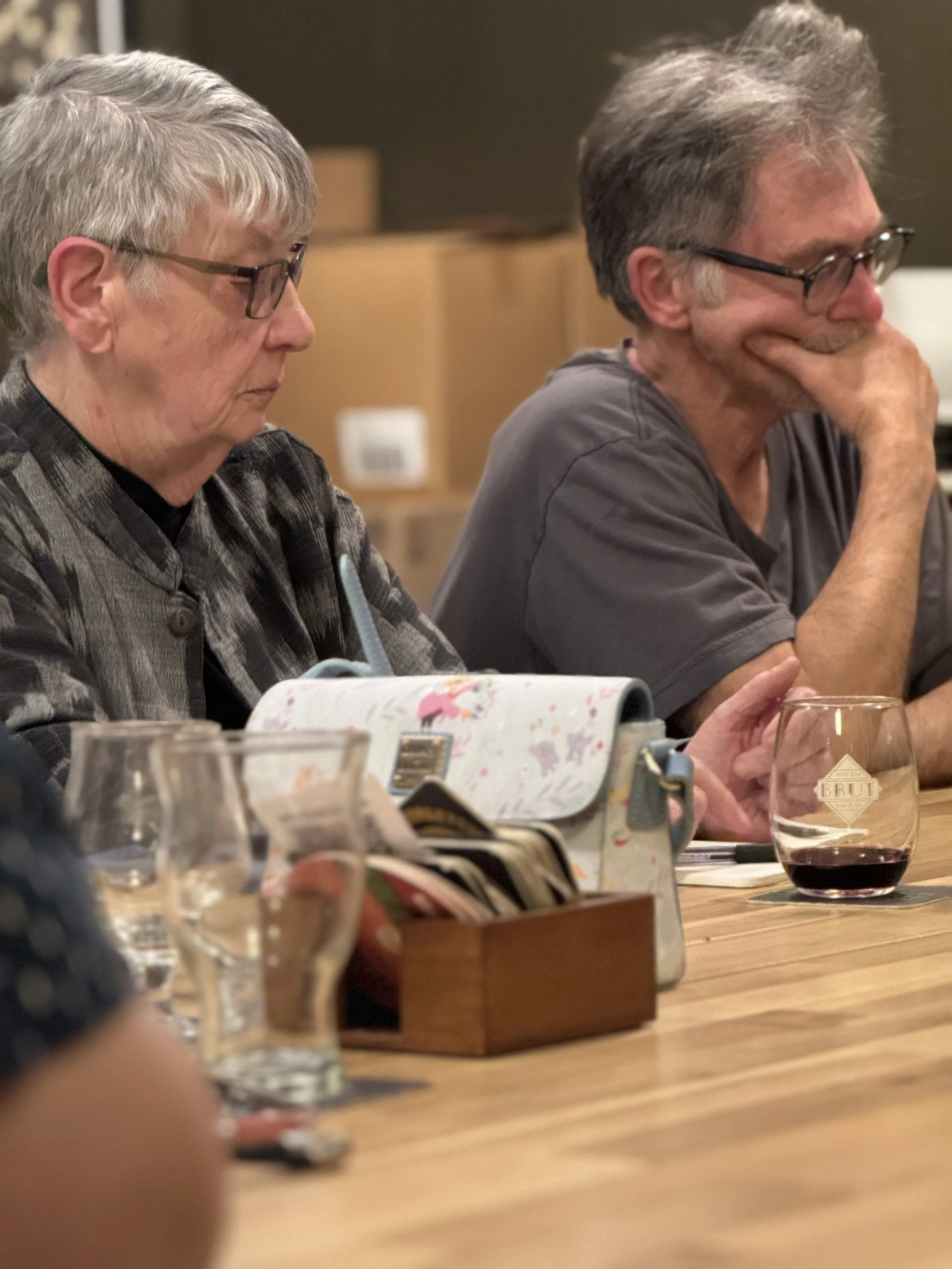
Jane listening at Scoundrels
The Mix of People
One of the things Jane values most is the range of people at the table.
“The various ages — from early 20s into my 80s — is amazing,” she said. She believes that kind of intergenerational gathering contributes to the health of a community.
She hears from many of her peers that they feel lonely, that their social worlds have narrowed. The mix at Philosofarian works against that isolation.
She remembers connecting with Ciera, one of the younger participants.
“Here’s a person you never would have known otherwise,” Jane said. “You have this thing in common, you share a bit of time, you answer some questions, you have a visit.”
There are no obligations attached. “She owes me nothing. I owe her nothing. But the friendship gives both of us a different point of view.”
Jane values the chance to be listened to without needing to speak much, and the practice of extending how long she can listen before wanting her turn.
Where She Is Now
Jane keeps showing up. She’s part of the rhythm now — someone people recognize, someone whose presence steadies the room.
She’s watched people come and go. She’s seen the group adjust and find its way. She’s learned something about herself along the way: that she can step back from the educator role, that listening can be its own kind of work, and that giving space to others creates room for her own thinking as well.
“There’s a lot of baggage that comes from the professionalization of teaching,” she said. “You have to set that aside.”
She has.
“No strand on that trellis loses its own identity, but with the support of the trellis you find that you can work together and connect.”
— Jane Hill
Support Philosofarian
If Jane’s story resonates with you, you can help sustain Philosofarian by joining the 42 Club or making a one-time gift.
