
Kenny Knowlton
Kenny Knowlton has a PhD in philosophy but no high school diploma.
He's Scottish and Mexican. He giggles a lot. He builds his muscles, but doesn't consider himself a bodybuilder. He can barely be found on the internet - he doesn't trust it.
And he's been thinking about how power works since he was fourteen and finally opened Capital.
Growing Up on the Ranch
Kenny grew up in Brazil on his father's working ranch - a horse training operation for cutting, reining, and barrel horses. He was always around it, though it's hard to say when he started training. It's just what he grew up doing.
When he was thirteen, he asked for a copy of Capital. He'd heard everybody “shitting on communism” all the time and wanted to know what they were talking about. But Catholic indoctrination combined with vehement anti-communism in his family made him terrified to open it. He thought something really scary would be revealed - like the devil himself might pop out. So it sat on his shelf for about a year.
Around that same time, Kenny bought a Che Guevara shirt. Not for political reasons, he just thought it was cool. That famous face with "resist oppression" underneath. He walked into the house and his dad - gringo cowboy vibes - saw the shirt and immediately told him to take it off. Threw it away.
So Kenny went and bought a biography of Che Guevara and memorized it.
One night at dinner, he asked his dad why he didn't like Che. Then he refuted every nonsensical thing his father said. It was vindicating. It was the first time the notion of rigor made itself clear to him: if you actually know what you're talking about, if you've done the work to understand something carefully, the person who's just repeating what they've heard falls apart pretty quickly.
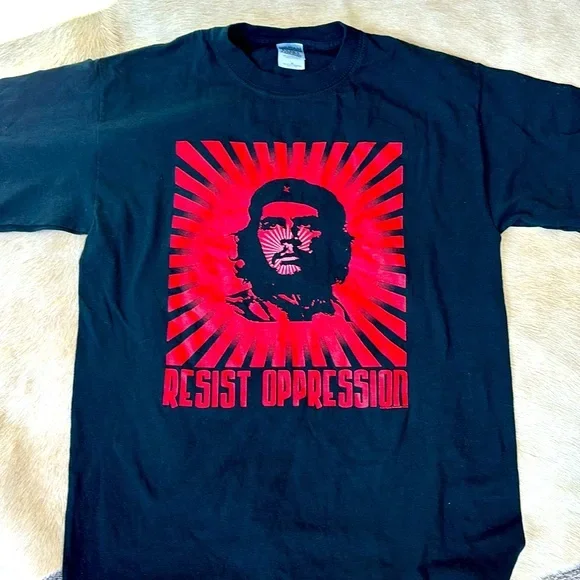
A pivotal fashion moment for Kenny.
Eventually, Kenny worked up the nerve to crack open Capital. One night on the ranch, terrified, he read the first sentence: "The wealth of societies in which the capitalist mode of production prevails appears as an 'immense collection of commodities'..."
He thought: wtf?
He flipped through the book. Saw all this complicated stuff - tables, footnotes, careful arguments. And he realized everyone was full of shit. They had no idea what they were talking about. They'd never read it. They'd never tried to understand it. They were just repeating what they'd heard.
Kenny wanted to know. Actually know. Not just have opinions, but understand how things worked beneath what everyone assumed was obvious.
Learning Through Doing
Training horses raised questions he couldn't ignore: How does knowledge get transmitted through practice? What assumptions do we carry into every interaction? How do you read what's happening in a body before the conscious mind catches up?
These are practical problems that demanded careful thought.
At sixteen, Kenny dropped out of school. He went to Chile to learn more about training cutting horses, then Argentina, then back to Brazil, then Texas by the time he was nineteen. The whole time, he was learning to pay attention to quality over quantity, the combination of rigor and method, the discipline to stay with something until you actually understand it.
After he stepped away from training horses, he studied Muay Thai, boxing, and jiu jitsu off and on. But after a while he realized he wasn't really interested in fighting. He decided to focus on building muscle instead.
The same principles applied: "The quality of an exercise and one's exertion is more important than mere quantity," he says. "Similarly, philosophy takes discipline." It's not about how much you do, but how carefully you do it. How present you are to what's actually happening in the moment.
Finally Getting to Study Marx
Kenny made his way to college, then graduate school at the University of Oregon. And he finally got to study Marx properly.
His focus became political economy and history, particularly in Latin America. (Warning: big philosophy terms coming soon) He's interested in how economic structures shape not just material conditions but the very categories through which we understand ourselves. How capitalism doesn't just extract resources - it transforms human relationships, restructures possibility, hides its operations in plain sight.
The point isn't just to understand how power works. It's to be able to think through our current situation so that we can see new pathways for change.
Teaching Others to Think
Kenny teaches at Linfield University now, where his students know him as someone who takes teaching seriously. Over the past two semesters, he's taken them to present at sixteen different times at undergraduate philosophy conferences in Memphis and Michigan, to name a couple. His students love him. Not because he makes things easy, but because he puts real effort into helping them learn to think.
For Kenny, the classroom is where philosophy does its most important work: helping people cultivate rigorous thinking, regardless of whether they're academics.
Public conversations are often shallow and can be ignorant, while academic conversations can be out of touch with daily life he observes. You don’t need to, “be an academic to cultivate rigorous thinking."
He tells his students that philosophy is arguably the most practical thing they could pursue: "There is no situation in life in which you will not benefit from thinking through things carefully and creatively."
Philosophical thinking is the careful navigation of everyday life. The attention he brings to training horses, the discipline he brings to the gym, and the rigor he brings to understanding political economy all serve the purpose of living thoughtfully in a world where power operates in ways we're trained not to see.
What's on His Mind
Lately, Kenny's been thinking about the problems of imperialism and technology. Their implications for political and economic life, especially concerning the environment. "Without direct social action and careful planning for changes in the functions of everyday life," he says, "I fear the future is much more dire than is often thought."
It's a sobering concern, but not a despairing one. The whole point of understanding how power hides is learning how to reveal it. And in that revelation, finding space for transformation.
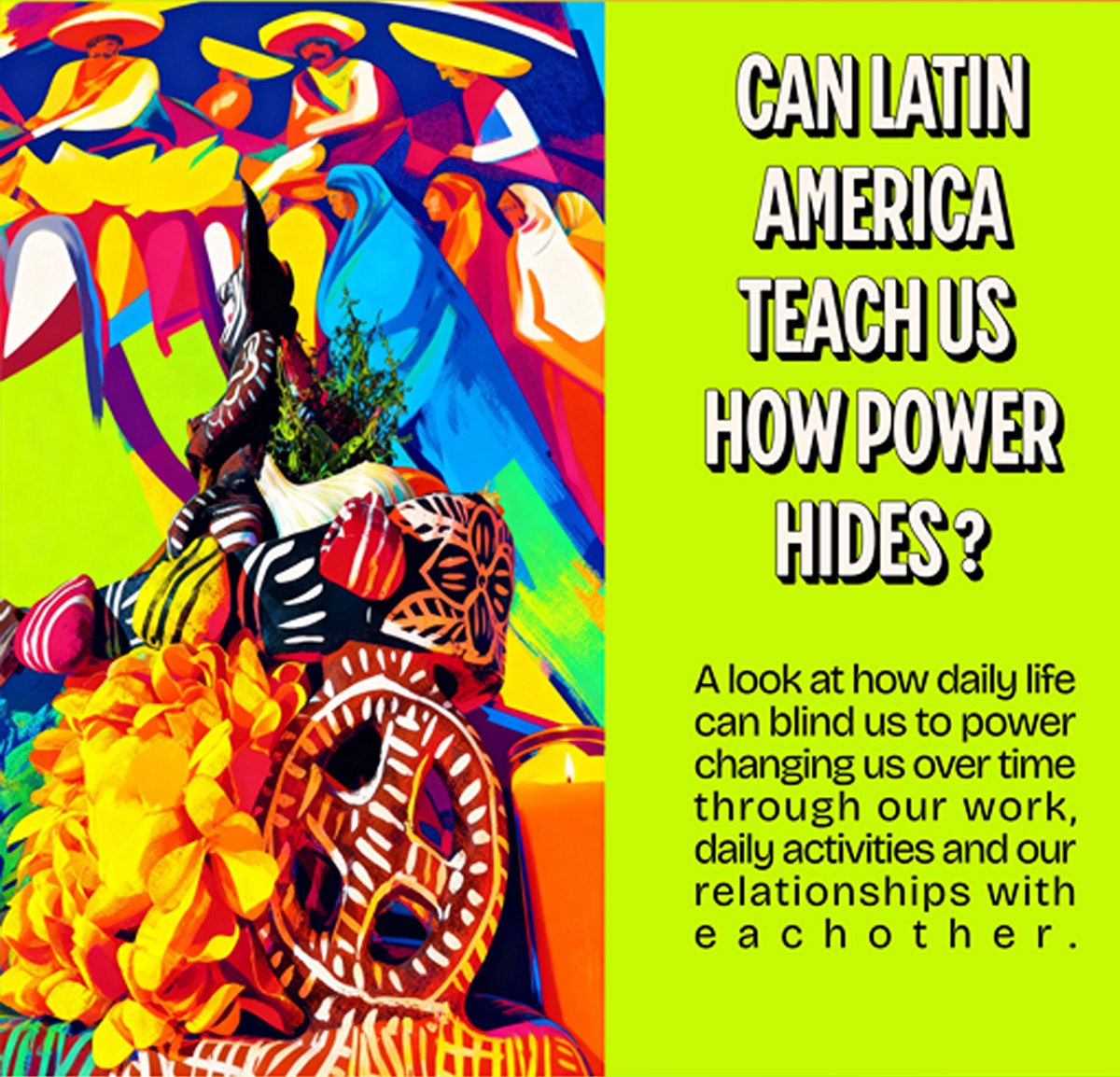
Flier for Kenny’s upcoming Wit & Wisdom talk.
After his Wit & Wisdom talk, Kenny hopes people leave wondering about power: how it operates at both macro and micro levels, how it shapes what seems natural or inevitable, how it conceals itself in the very structures of everyday life.
Latin America has much to teach us about these questions. Not because it's exotic or other, but because the operations of power - colonialism, imperialism, extraction, transformation - are written in its history with a clarity that forces us to see what we might otherwise miss.
Kenny's invitation is to look carefully, think rigorously, and ask what becomes possible when we stop taking the current arrangements of power as given.
He'll be at Fort George on January 8.
