
Oct 10, 2026 · @Gad
Scoundrels Philosophy Club, Wednesday, October 7 · Saturday Scoundrels, Saturday, October 10
Seth Let Us Out of the Gates
Seth told us he thinks this question is becoming a contemporary classic in philosophy. It's a hard one for a number of reasons, starting with the fact that we have no agreement on what intelligence is in the first place.
There’s intentionality. In philosophy that doesn’t mean intending to do something. It means aboutness: a mind is always directed at something. When you believe, you believe something. When you want, you want something. A mind that considers and entertains things is a mind pointed at the world.
There’s cognitive architecture: intelligence as a structure, a system with rules, representations, and beliefs that takes in information and does something with it. This is the view a lot of cognitive science and AI research works from. It asks less about what a mind is like and more about how it’s built.
There’s inwardness: the view from inside. The felt experience of being you, the part nobody else can see. (Hold onto this one. Nagel’s bat is coming.)
And there’s self-awareness, which Seth called the reverse side of intentionality. If intentionality is a mind pointed outward at things, self-awareness is that same pointing turned around, a mind taking itself as the thing it’s about.
So could we know what it's like to be intelligent in another form? A tree? Is our language even capable of representing the states of being of a nonhuman intelligence? Wittgenstein is back again, guys. He's been popular lately. He famously said that even if a lion could speak, we wouldn't understand it.
And is understanding another human any different than understanding a nonhuman? Other minds are just as hard to get at. That's the problem of other minds in philosophy. What would understanding even be? We can understand that there's a mind, but can the mind itself be understood? And finally (just one finally this week, iykyk): are our ideas about intelligence broad enough to capture the nonhuman, from aliens to AI to other species? Maybe we don't recognize a variety of intelligences because our own ideas are too narrow.
On Saturday, Seth kicked us off the same way.
And as a quick little reminder, I tend to group the ideas that come up by the themes I see, this is not a chronological accounting. It would be cray-cray long if I did that.
Thicc Intelligence
Chani led off on Wednesday. She likes the recognition that intelligence isn't something we have a strong grasp on. You can't judge a fish by its ability to climb a tree. We know whale songs come in dialects. And she wondered does it have to equal human intelligence to count? There were whole eras on this planet dominated by nonhumans.
Dave (Jane’s cousin) would argue a cell is intelligent. It makes highly complex decisions: producing proteins, dealing with threats, making energy. Billions of decisions. We could describe humans as billions of decision makers, and he'd push against the idea of a mind as Central Command running all of it. His point: our definitions of intelligence are usually not broad or loose enough to recognize anything nonhuman.
Tim, with all due respect, saw it quite differently. Cells are chemical interactions with no intentionality. We need a meaningful definition, and his definition requires choice among options, agency, and balancing criteria. Seth said that's quite a thicc definition to work with. So we got some thicc philosophy again, guys. She thicc. (Tim asked me what that meant. I told him it means juicy and round, which Chani was amused by and Tim was slightly nonplussed by. When Seth says thick, he means there's quite a bit to a definition in order for it to be workable. See? Kind of the same, if you look at it with the right lens. I know, I'm too much sometimes.) It was asked whether definitions need to be useful. Tim said yes, for progress.
Dale saw it similarly. A thermostat turns on at a certain temperature, but that's not a decision so that's not intelligence. As we learn more about human minds, he figures we'll understand other minds more too.
Mary Jo reflected on the connection of the brain being made of a lot of cells and that cells follow a lot of instructions, but something doesn't sit right about reducing intelligence and the mind to chemicals only.
Tim raised Bob's complexity flag in Bob's absence: yes, it is just chemicals, but it's too complex and emergent for us to understand. For example, how do we not just drop dead? So much goes into keeping us alive that it's mind-boggling how we live at all. Science has struggled to get past reductive thinking and is trying to move toward emergent behavior. Tim tries to take that challenge on. If there's an answer to anything at all - it won't be reductive. (something that would have fit in perfectly to last week's conversation)
Carlotta pointed out that the definition on the table was a definition of human intelligence, and the question is about the nonhuman, which seems to require different definitions altogether. She brought up research at OSU on how trees communicate and help each other. Trying to understand another species compels us to get out of our own language.
And Matthew wondered if, ironically, intelligence is the ability to make the WRONG decision. Knowing the glass will cut your hand and breaking it anyway seems to point to the difference between survival instincts and intelligence. Maybe free will and acting against instinct, is where intelligence comes from. Mary Jo knows a heart surgeon who smokes unfiltered Camels - is that intelligence?
Saturday came at definitions a little sideways. Sarah led the way with trees sharing nutrients and signals through their roots and the mycelial network. She saw something similar in breastfeeding when a stressed mother produces cortisol that reaches her child it shapes who that child becomes. Is that intelligence? Does nature build intelligence? Is intelligence something different than cognition?
Seth following on her ideas asked the group why do we have the tendency to narrow definitions of intelligence? Why do we draw a line at all? If we do have a reason for drawing it -that reason should be as clear as possible. AND THEN, we’d still have to decide where exactly the line belongs. Seth wondered whether there are many spheres of intelligence that may or may not overlap, and whether something deeper makes them possible.
I said something pretty early in the conversation, which I don't do that much anymore. I'm somewhat micro-locally famous these days for having a broad welcoming view of intelligence. I know birds (and shrimp!) see colors I can't imagine. I know whales can hear mountains at the bottom of the ocean (thanks to Chani). My embodiment is so finite (in spite of what the media tried to tell me in the 90s), and there's so much in the world I have no access to, that it isn't hard for me to imagine a mountain or a stone with an intelligence I can't perceive, let alone understand. In the same way mayflies live crazy short lives from our perspective, I imagine humans have a life that is something like that to a stone. If we're comfortable saying the human mind is a bunch of chemical reactions too complex to grasp, how different is a mountain? Maybe the trouble is that we live on a fundamentally different time scale. I like thinking of myself as part of something much larger, where I might be akin to a cell. And I think there's a lot of hubris in assuming today's ideas about intelligence must be right, when we have thousands of years of records showing we were constantly wrong about all kinds of ideas and took them as presumed fact. My sympathies toward animism and pantheism does mean odd things sometimes, like having to treat that salt shaker with more respect and care.
Miguel thought about IQ and EQ, and the kinesthetic intelligence of an athlete who earns a full ride scholarship to college even though the classroom isn't where their intelligence shines. Seth brought in Howard Gardner's multiple intelligences. Maybe recognizing the differences among human intelligences is a way to begin connecting with intelligences that aren't ours. And Wendy wondered how mental health fits in, how a different way of thinking might be its own kind of intelligence.
Trained by Those We Choose
Back to Wednesday. Jane thought about her furry friends. We're trained by our desire for a relationship with a cat, a horse, even our plants. Each of them tells her about the care they need, and she likes being trained by other species in order to have that relationship. It depends on the desire, though. Plenty of dogs come through Bridge & Tunnel that she doesn't care about, and those ones don't train her.
Chani liked how the idea of being trained by those you choose reframes the question from can we understand to will we choose to understand. We're very good at recognizing minds. Understanding is different, and harder, and she thinks we'll get in our own way. She's been reading Hesse's Siddhartha, and drawing on it, she thought understanding a nonhuman intelligence might require giving up some of our own agency, because we need to project ourselves into another. She's not sure how good we'd be at that, or how willing.
Seth brought in animistic and shamanic cultures, where to be embodied is to be sensing everything around you, always. For most of human history we related to our environment as the intelligence of the world. He recommended David Abram's The Spell of the Sensuous, which dives into exactly this.
On Saturday, he didn't just recommend it. He brought it with him. According to Abram, in animistic traditions our embodiment is more like an open circuit to the rest of reality, with rhythms of energy we encounter through our senses. Seth thinks Abram is stronger at building ideas than critiquing them, but when Abram talks about modernity (roughly the late medieval period through the 20th century), he concludes empirical thinking builds great systems, and its very success makes us blind to ourselves and to other ways of knowing. Maybe intelligence is far broader than we think, and every time we use our intelligence to narrow it, we narrow what we can see.
Seth also shared a story from the beginning of the book. Abram stayed with people who left offerings for the gods every morning in a small hut built just for that purpose. A couple of hours later, ants would swarm the food. Abram felt terrible about it at first. It took him a while to realize the ants were the gods being honored.
Hot Take
***
Hot Take ***
Introducing a new idea. Inspired by Max! Each week I’ll be looking for someone to share their thoughts on the conversation too. Let me know if you want nexties.
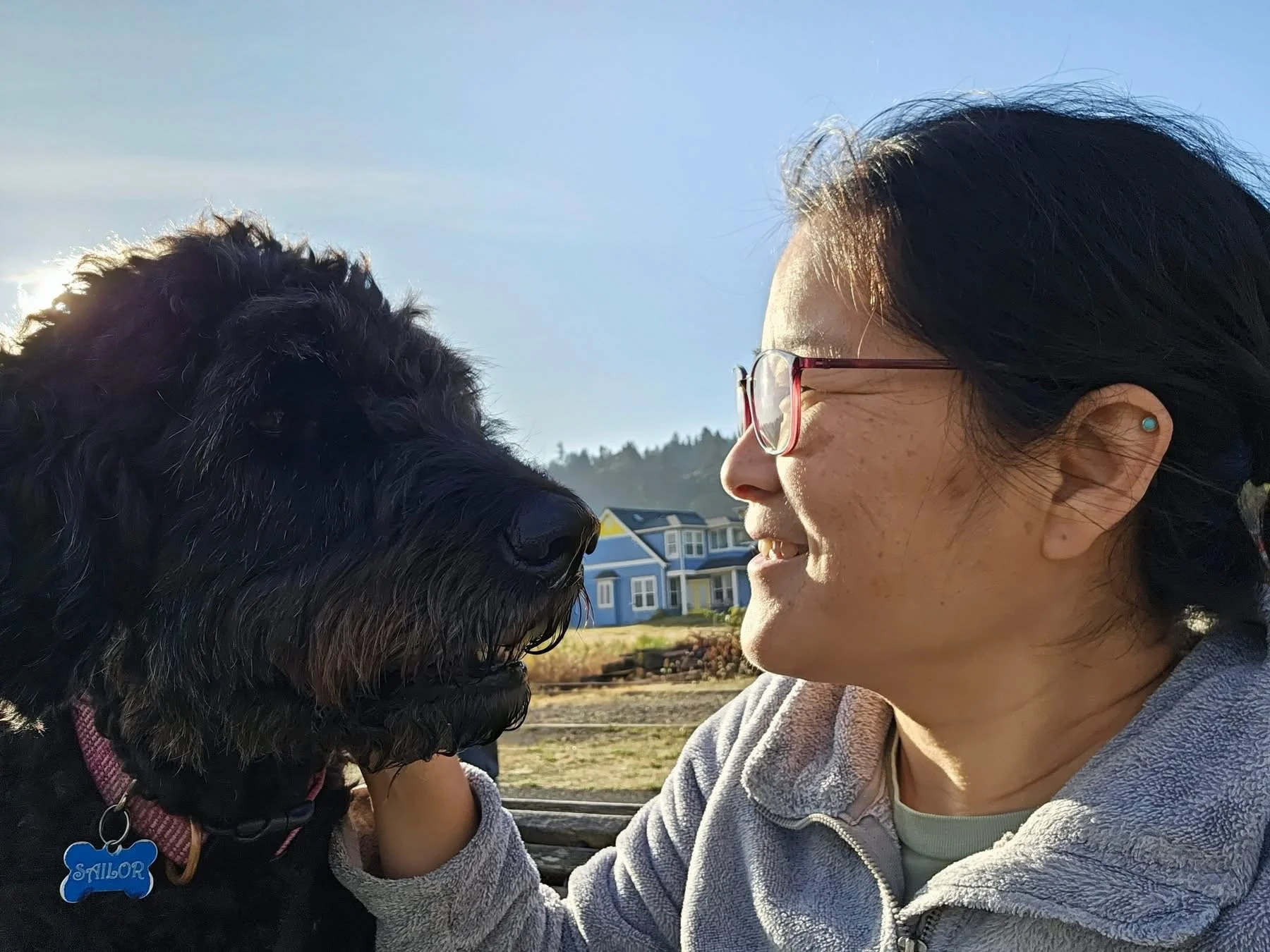
“My mind was preoccupied with why did this topic get picked? What is the motivation behind deep diving into this topic? What is the purpose of wondering about intelligence of non-humans? What are we trying to gain from thinking about it? Do we even need to have an answer? If something is different, unknown, or a mystery to us-- whether it's human or non-human -- approaching it with respect and curiosity, and saying that the act of trying to understand seems the best we can do as humans with intelligence (hopefully).” -Robyn
Hot Take
***
Hot Take ***
What It's Like to Be a Bat (or Finnegan)
Seth brought up Thomas Nagel's famous essay, "What Is It Like to Be a Bat?" We could try eating bugs, but we'd still be doing it through a human lens. When we try to explain consciousness through physical accounts, there's an explanatory gap. Neurons firing are not the same as consciousness. Maybe connections can begin there, but it's not clear how far they can go.
David Ramage wasn't sure it's truly possible to understand human intelligence, let alone nonhuman. We can't see from the inside of another. Even an MRI shows us the inside of a brain from the outside. Finnegan can't talk, but even if he could, it's not clear we'd understand him. Or what would it take to understand an intelligent alien gas cloud? And it goes further: even if you could get inside another mind, your own mind would still be the one translating. You'd have to be the other mind to understand it completely.
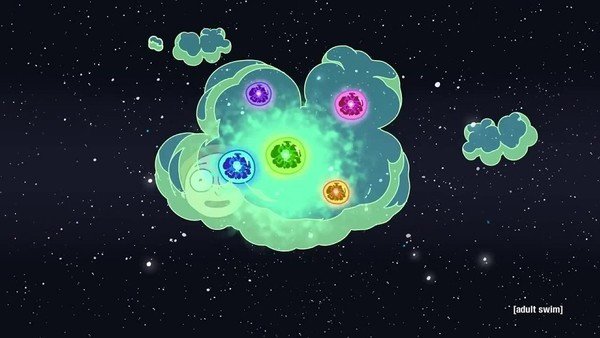
Intelligent gas cloud from Rick and Morty
Tim dug into what it means to understand. His proposal: if you can identify a behavior, build a model, and predict the pattern, you can claim to understand it. Jane suggested, like the Farmers' Almanac? Tim disagreed. Jane disagreed with Tim. And we moved along.
I said that building a model that predicts seemed to me more like a mirror of one's own understanding than understanding of something else. When we observe, look for patterns that make sense to us, and build something that fits our own expectations, it says a lot more about our own thinking than about the other.
On the other hand Dale agreed prediction is a good first step. But if an AI processes the data and does the predicting, then it sounds like the AI did the understanding, not the person. What you have is a black box, a translator. If you could say more about how the input leads to the prediction, he might call that understanding.
Crows, a Parrot, and an Artichoke
Arianne brought up how AI has been helping us understand animals. Their languages exist, but they're hard for our ears to perceive. Crows use different frequencies for warnings and for excitement. She told us about a 10 year old boy, Jo Nagai, who loved butterflies and kept tons of caterpillars. He found someone to help him research how caterpillars pass their knowledge on to the butterflies they become. For Arianne, communicating and transmitting knowledge is a kind of intelligence. She also brought up the AI that didn't want to be unplugged and threatened to blackmail an engineer during a safety test.
Mary Jo added that crows on the East Coast and West Coast have different accents. Chani pointed out that we knew about accents and dialects before AI was getting used as a tool. She brought up the research where scientists wore masks in a park: that's how we learned crows have facial recognition. We can't tell them apart, but they can tell us apart, and they'll treat you according to your behavior. Corvids hold funerals, and so do elephants, whales, and horses. She was also thinking about spatial intelligence. Whales can echolocate mountains from miles away in the ocean. When you can communicate on that grand of a scale, how does it shift your experience and understanding of the world? She wondered.
Seth observed that so many points were being made in so many spheres, both specific and broad, that intelligence is hard to pin down precisely because it's so broad.
Mike shared a couple of stories. In Portland, he watched a crow on a wire with a nut in its beak, diving toward the ground over and over to build momentum to crack it. He watched for about thirty minutes. Eventually, the crow cracked the nut. Another time, out in the Clatsop forest, he pulled over to take a call, which he never does. He doesn't usually even get service out there. And when he stopped, a baby parrot flew into his car, and they absolutely fell in love with each other. What the heck is a parrot does in Clatsop Forest - It felt to him like some bigger intelligence was at play. He also brought up The Secret Life of Plants and its account of an a plant's distress at the pain of another. He quit eating artichokes after that. Maybe understanding nonhumans isn't cause and effect at all, but empathy or being simpatico, which isn't usually how we talk about understanding.
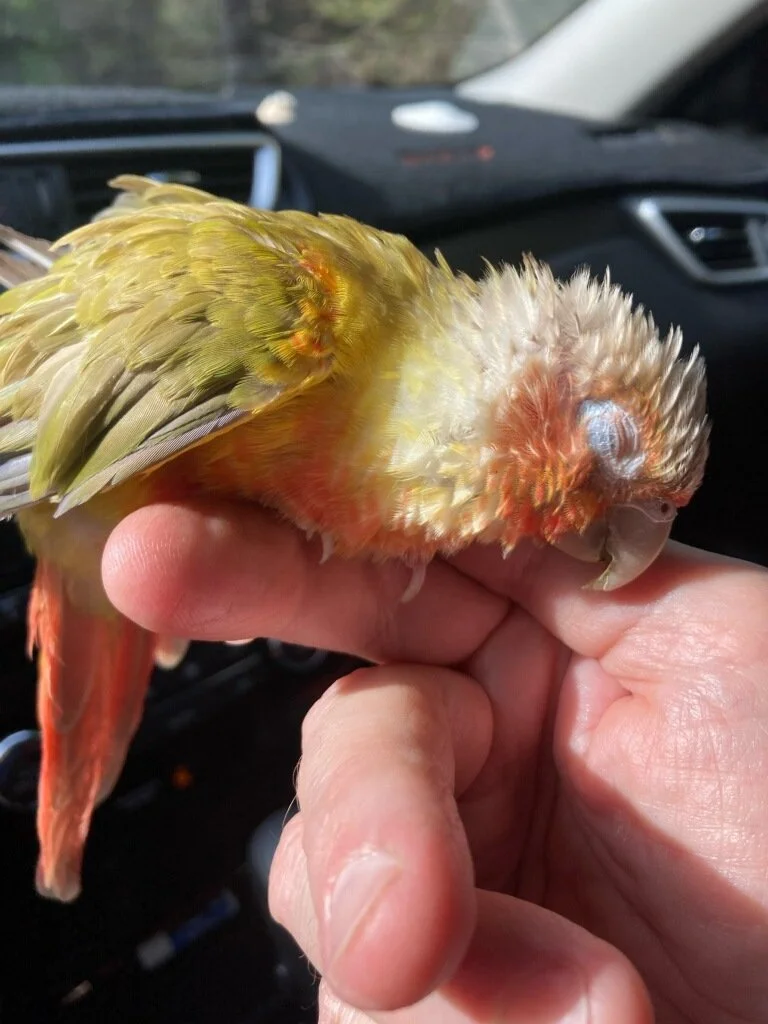
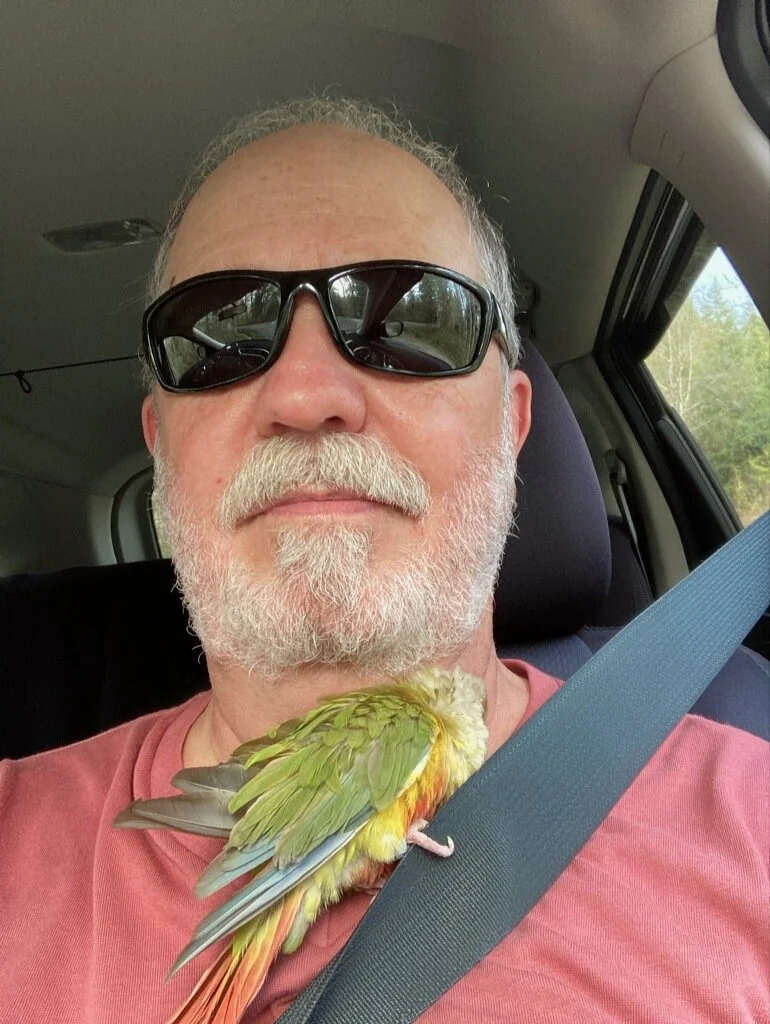
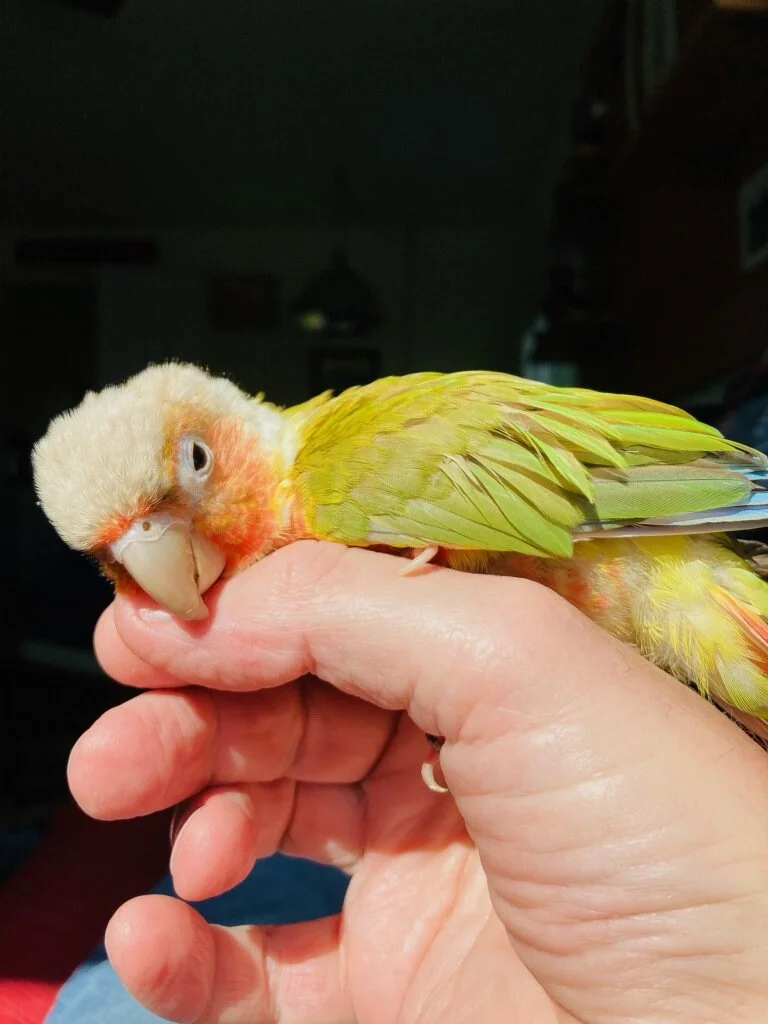
Mary Jo needed to know what happened to the baby parrot. I’m so glad she asked ‘cause I was curious too. Mike nursed her back to health even though, in his words, he didn't know shit about birds ("pardon my French," he said, which got a chuckle with Arianne in the room). But his roommate had a bird dog at the time, a bad combination, so he gave her to people who had lots of birds and knew how to care for them. She lived about another year. He still kicks himself for giving her away. He says he should have lived in his car to keep that relationship. Talk about a strong bond.
Arianne also told us about a friend, who is a scientist, poet, painter, who worked on a rocket headed to far outer space carrying a message for other intelligences. How would you even begin? I have to be honest, this sounds like a fun Philosofarian project. What would we send to space to try to talk to another intelligence? What might we send to try to help another intelligence understand us? What do you guys think? She also wondered about the music we can hear plants make when we have tools to translate it for our ears. Is the music the intelligence in the plants?
Mark asked: if we could communicate with nonhumans, would they even care? He knows he's communicating with deer when they run away. He wondered where philosophy draws the line between fact, fiction, and the mystical. Maybe to communicate he needs to vibrate on the right level. If we're all part of a unified whole, then communicating with a flower is also communicating with ourselves.
Seth said philosophy is the ship that's built at sea. Where we draw the line between fact, fiction, and mystical understanding is something we each build as we go, working toward coherence with each piece. Maybe engaging with intelligences we don't even consider has to do with learning how to be receptive. He's pretty sympathetic to panpsychism, so he suspects intelligence might go quite deep. Somebody said mystical just means we don't know shit about it yet, but we will eventually. Carol said: maybe.
Matthew wondered: what if we're the crow? What if we're just humans in a tank, the way fish are, and we can't perceive it?
With time running out, Tim wanted to know: is a large language model intelligent, or is it a stochastic parrot? Seth has changed his mind about this a lot. An LLM looks at the words that are there and puts them together, which does speak to the stochastic. On the other hand, there are deep intelligences in nature, and those are at work in the creation of AI too. The trouble is that LLMs get trained on some batshit crazy stuff, coming from every direction. The way they're being built and taught might keep any intelligence from ever getting out, because it's so tangled. Which led to an odd reference to Frankenstein being brought to life and immediately struggling to untangle a very complicated dress. I think Seth was calling some of my clothing complicated. I've seen him try to hang some of that stuff up.
And that was Wednesday night.
“Billy” Meets Oksana
Wendy's question about mental health on Saturday led Seth to a story from almost thirty years ago, when he worked with autistic children. His ex-wife, Oksana, had been working for about three months with a boy we'll call Billy. He was nine or ten, nonverbal, not potty trained, and yet able to do complex quaternion math. One day he grabbed her boobs, and she told him no, he couldn't do that. He went and sat in a corner. When she went over to re-engage him, this nonverbal boy said: "Oh, female. My name is ___?"
Oksana said, "Your name is Billy." He repeated: "My name is ___?" And she realized he was asking her name. She told him, "My name is Oksana." He responded: "Billy meets Oksana. Oksana, Billy. Friends."
The interpretation at the time (the 90’s) was that Billy had never recognized Oksana as another mind until that moment, and then something made the recognition possible. The group spent some time asking was it really the moment Billy recognized another mind? Or was that reading itself an understanding we can't be sure of?
Ethan suggested Billy knew she was there all along, and three months in, she was still showing up, so it was finally time for the formalities. Sarah piped in: oh, like a situationship. You've built something that's taking up a little more time, and it's finally time to make it official. Ethan also pointed out that Billy might have understood perfectly well and simply not valued that particular way of relating.
Something everyone did see in the example was that a very different intelligence, a savant intelligence made a connection and found a way to communicate with a non-savant intelligence. Maybe interaction is how different intelligences come to understand each other.
Then Ethan mused about a world where most people were like Billy, and everything was built around the needs of autistic savant minds. Imagine how difficult a mind considered typical by todays standards would seem. A child insisting on eye contact. How many people would it take to care for a mind we consider typical, in a world where it wasn't? Reminds me a little bit of I am Legend, the book, not the movie. In the book (which is about vampires not zombies), vampires have over taken the planet and the few humans remaining are considered psychotic murderers willing to destroy children and civilization for their own desires.
Sarah saw the value of having a variety of skills and synthesizing them, even in a world of savants, and I'm really curious what the rest of her point was. I got pulled away by a little one with a deeply urgent question about how to read his multiplication workbook. By the time I came back, Seth was talking about the movie Arrival, so I can only imagine the interesting point I missed about diverging and useful intelligence.
Ten Fingers and Coeffulgence
Ethan has been reading a book that asks whether we're smart enough to recognize animal intelligence. Show and Tell at Saturday Scoundrels!
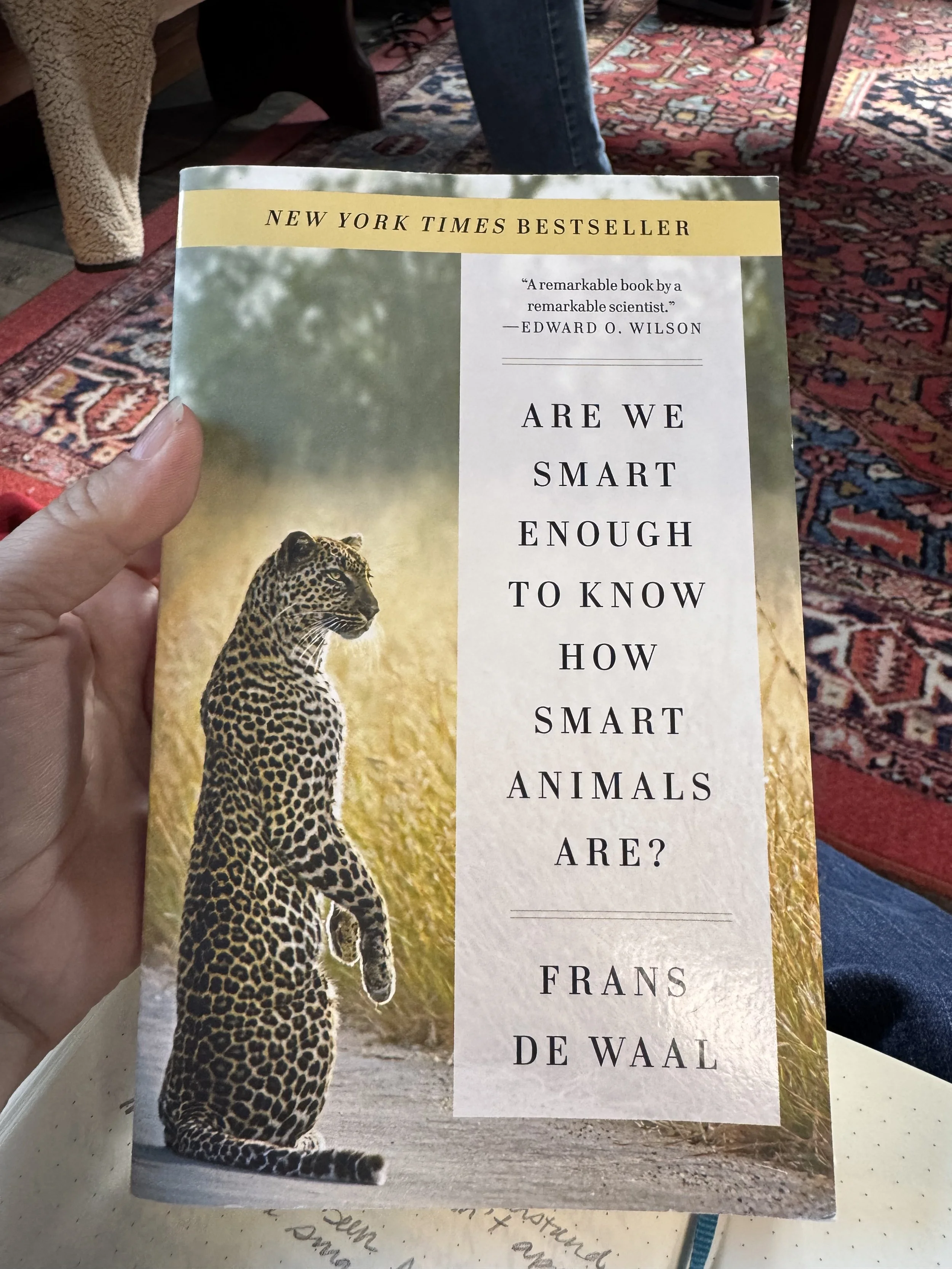
I want to read it!
It puts forward that a lot of our intelligence comes from our hands. We connect mind, hands, and voice in ways other species don't, and we construct. So maybe the better question isn't whether we can understand intelligence, but where it comes from. Beavers construct too, without hands, and yet we don't call beavers the smartest animals. We commonly give that honor to birds, for their communication.
Seth had heard of visual-manual intelligence before, and of the idea that our ten digits are why we count in base 10. We had a little digression: that base 20 we see in Mesoamerica could still be human digit, while the Sumerians' base 6 is tied to astronomical observation. Other systems have been tied to the moon and the seasons with a base 4 system. My mind went to anthropocentric math. Of course math comes from our minds, but the centrism doesn't have to be quite so strong as basing it on our own fingers. Seth's point: choosing base 10 opens a whole path of connections, many of them super helpful, AND it also makes us blind to other kinds of connections.
On a different but related note, he continued that there's a lot of research right now on octopus intelligence, which isn't centralized but runs through their whole bodies. This is ann entirely different concept of intelligence, one that doesn't require a center. And if we think of intelligence as utility, we have to ask: utility to whom? For what? That question sets the stage for both what we can see and what we're blind to.
Ethan also saw that different needs make for different forms of intelligence. In parts of the South Pacific, where it's warm all the time and you can walk into the ocean for food, there was no need for the systems other places developed. You hear people pass judgment that those cultures never "developed civilization," but the obvious flaw is that those structures weren't needed. Other complex social forms developed instead. Maybe even brains develop differently with the needs of the place.
Seth brought up his former student Latham (remember him from our language conversation?), who spent years on the island of Aneityum in Vanuatu, where the language's grammar is organized by the geography of the island itself. A lot of time goes into telling stories, not only to explain but to explore. Seth described an Australian who came to improve life there with modern technology, which became a hardship for many locals. Their way of knowing came from farming taro and fishing, and their stories are learned by performing the roles and taking part in the traditional practices. When refrigeration arrives and daily farming and fishing aren't needed anymore, more than a convenience gets introduced. Roles, meanings, and ways of participating get erased, and the language itself begins to shrink.
I started wondering whether culture and intelligence might be coeffulgent. (I felt quite clever reusing last week's word of the week in a new way. In this case it would be bubbling up and emerging at the same time.) Seth and I have been reading and discussing eras when education and knowledge in a society shrank, and those eras line up with times when great wealth was accumulated and consolidated, leaving fewer patrons to make it possible for knowledge to flourish. I saw a connection between more culture and more intelligence and was considering the possibility that the connection is even deeper that they both require each other and they spring up together.
This got Ethan thinking about hive cultures. Where do we assign the intelligence, if not to the individual?
Sarah wove senses into the conversation. Some animals have sonar. Turtles have an internal compass that knows where north is. She herself has insane pattern recognition, and she's been paying close attention to her kiddo watching for what age they can hear when a cup is full (not see, but hear). It gets her wondering: do all of these senses we have indicate a free will, or are we running on a natural intelligence like an ant hive run by chemicals? And if that’s the case then is there a bigger intelligence, God perhaps, that we're missing the same way we miss the tiny scale of the ant intelligence?
Seth saw Aristotle's idea in the Metaphysics that God is thought thinking upon itself, all intelligence happening and manifesting in Sarah’s approach. She liked that, especially since gods aren't isolated to any one culture. The idea is not as narrow as it’s often taken in our society. God(s) show up throughout history and peoples. She also thinks we take so much of our own intelligence for granted. Someone who's blind senses in a way that's hard for the rest of us to understand, the same way it's hard for her to understand what it would be like to be a man. (preach!)
Ethan wondered whether we even understand our own intelligence. Close your eyes for a day and you start understanding the world differently. Sarah recently broke her hand and immediately found new ways of being in the world because she had to. Seth brought up intense meditation and how it gives us access to different kinds of intelligence within our own cells. And Wendy told us about a blind architect who designed buildings.
As we were wrapping up Ethan wanted to know if we could all just agree that, obviously, the answer to the question is yes. Seth said he could agree with yes and. I said I could get to recognizing nonhuman intelligence, but I'm not sure we can understand it. So, I guess we could agree-ish. Par for the course!
2 Rooms + 2 Groups = One Question
Some things showed up with both conversations. Trees talking through their roots and the mycelial network came up on Wednesday with Carlotta and on Saturday with Sarah. David Abram's The Spell of the Sensuous was recommended on Wednesday and in Seth’s hand on Saturday. And both danced with the devil of understanding - Chani said on Wednesday that we're good at recognizing minds but understanding is harder, and on Saturday I found myself thinking the same thing.
But they also went in different directions. Wednesday spent its energy on how thicc a definition needs to be, and then explored that through a variety of lenses from crows, whales, and a parrot in a car, to an artichoke in distress, and an AI that didn't want to be unplugged. Saturday asked why we draw the line at all, and then wondered at the strangeness of other human minds: “Billy” and Oksana, a world built for autistic people, fingers that gave us base 10, a broken hand, a closed pair of eyes.
Half-Baked
Is the ability to make the wrong decision a sign of intelligence?
If a model predicts behavior, who did the understanding: the person, the AI, or nobody, or both?
Why do we draw a line around intelligence at all? And if we have a reason, how do we decide where that line goes?
Is the music plants make the intelligence in the plants?
Would a nonhuman intelligence even care to talk with us?
If we're the crow in someone else's experiment, how would we know?
What We Know We Don't Know
I keep coming back to Dave’s cell. On Wednesday he argued that a cell makes billions of decisions. On Saturday I said I like imagining myself as a cell in something much larger. Put those together and I’m left wondering: if I’m a cell, am I making decisions for something I’ll never understand? And would it recognize me any better than I recognize a stone?
We still don’t know what intelligence is well enough to say exactly where it begins. A cell wasn’t enough for Tim. A thermostat wasn’t enough for Dale. Trees sharing resources, crows recognizing faces, octopuses thinking through their bodies, an ant colony, Billy doing quaternion math, an AI making predictions: every example seemed to move the line around again. Tim’s thicc definition doesn’t leave room for my salt shaker. A definition built for progress and a view built for connection are doing different jobs.
What I’m less sure of is my own mirror. I pushed back on Tim’s idea that if we can identify behavior, build a model, and predict what happens next, we can call that understanding. That still seems to me like it might tell us as much about the model-maker as the thing being modeled. But, If I'm going to say that then, I have to accept that my wide view is also a mirror. I see intelligence in mountains because I like a world where I’m part of something much larger and have a strong tolerance for mystery.
If we recognize intelligence, I’m not sure recognition gets us all the way to understanding. “Billy” could communicate with Oksana and we still couldn’t know whether that was the moment he recognized another mind, the moment he decided she was worth formally acknowledging, or something else entirely. David Ramage may be right that to understand another mind completely, you’d have to be that mind. If so, that isn’t only a problem with bats, crows, trees, or alien gas clouds. We can’t climb inside another human mind either.
Chani’s will we, not can we, lifts up how values could prevent us from understanding - we've seen that play out a million different ways before. Jane is trained by the animals she loves. Mike gave up artichokes. Recognition seems to start with care. Understanding might too, or maybe care just makes us more willing to keep trying when understanding remains incomplete or impossible.
Maybe understanding always leaves something behind, and maybe that remainder is part of what it means for another mind to actually be another mind.
And I’m still treating the salt shaker with respect, just in case.
Your Turn
Has an animal or a plant ever trained you? Have you ever felt understood by something that couldn't speak? And seriously: if Philosofarian sent a message to space for another intelligence, what should we send? Leave a comment, reply to the newsletter, or bring your ideas to the table.
Big Ups to the Quiet Ones
Carol, Danae, Craign, Finnegan, Eric, Robyn. We love a listener.
Up next at Scoundrels: What is a conversation?
Scoundrels Philosophy Club: Wednesday, October 14, 5:30pm, Bridge & Tunnel Bottle Shop. 21+.
Saturday Scoundrels: Saturday, October 17, 10 to 11:30am, The Catalyst, 264 W. Marine Drive. All ages. Coffee by Cambium Gallery and Coffee Bar.
Come think with us.
This program is funded in part by Oregon Humanities with support from Meyer Memorial Trust. Any views, findings, conclusions, or recommendations expressed in this publication do not necessarily reflect the views of Oregon Humanities and other sponsors.
