
Perpetual Becoming at ENCORE
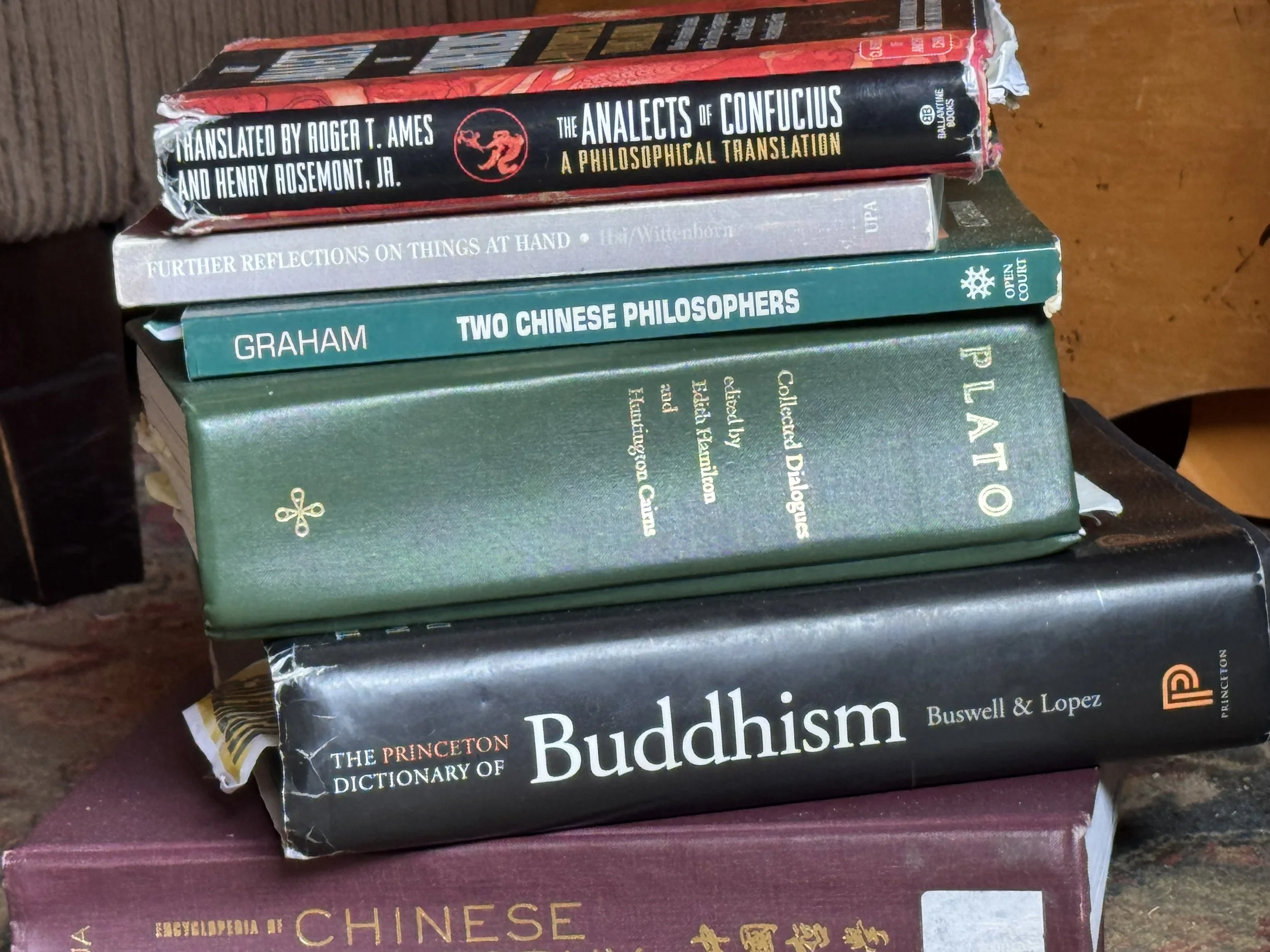
Hey there, everyone. As you know, we’ve been pretty busy working on the upcoming Fundraiser/Friendraiser for Philosofarian. And, as a consequence, we’ve fallen behind in posting summaries and reflections on Scoundrel’s conversations. We plan to make it up over the summer, but we also thought it’d be good in the meantime to give you a little something to tide you over philosophically. To that end, Gad has asked me to talk a little about other philosophical endeavors that Philosofarian has been involved with recently. Specifically, I’d like to talk to you a little bit about the Chinese philosophy class I’ve been doing with ENCORE over the past year.
So here’s the background - in case you’re not familiar with the term ENCORE, it’s an acronym that stands for “Exploring New Concepts of Retirement Education”. As the name suggests, you have to be of a certain age (over 50) to join. Essentially it’s a program of non-matriculating college classes for senior citizens. I’ve been working with them for over 17 years and I have to say ENCORE has pretty consistently provided me with some of my favorite classes I’ve ever had a chance to teach.
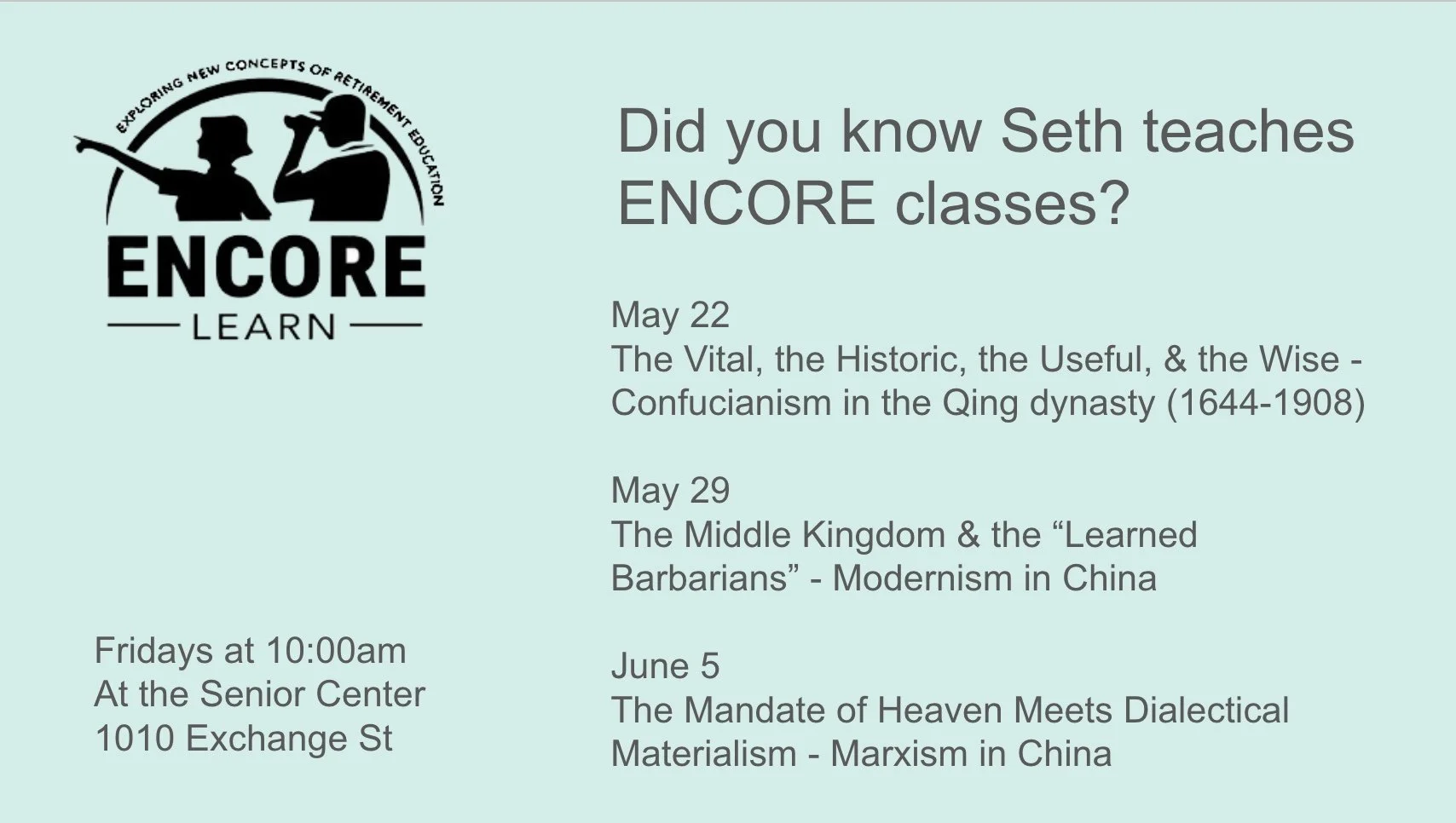
If you’re of an age, feel free to drop by!
Part of this is because they’ve been very generous in allowing me to teach whatever topic I wish, however I wish. This is meant that I could experiment pedagogically and philosophically with ideas that I wanted to work through with the class. On top of that, the students have always been engaged and eager to learn, and were more than willing to share their experiences and insights in meaningful ways.
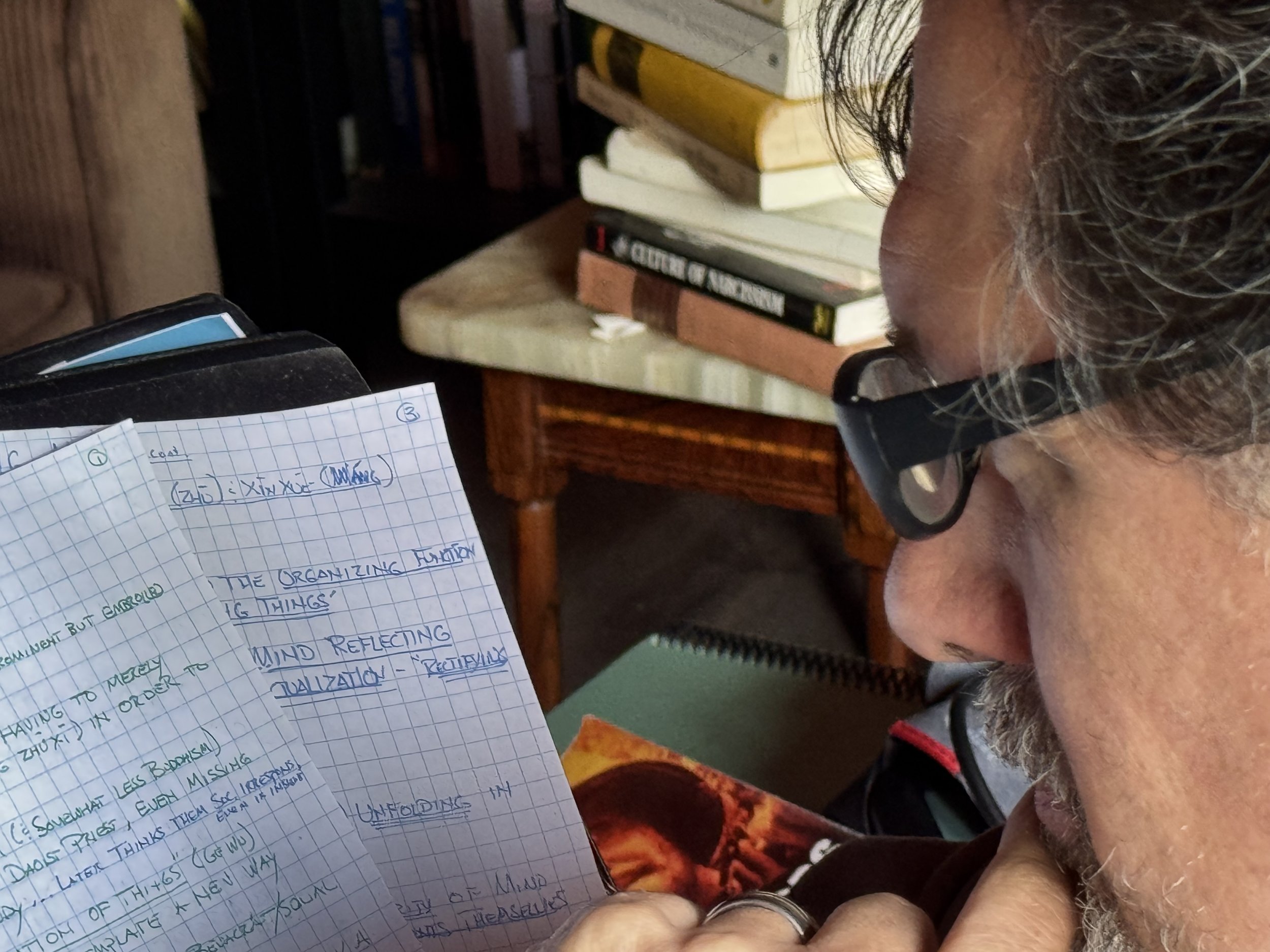
This is part of the reason why I agreed to do a three part series on “ The Arc of Chinese Philosophy” - from antiquity to the present. The first part ran from October through December and dealt with the origins of Chinese civilization in general (from approximately the early second millennium BC) up until about the year 400. The second part ran from January through late March and covers between the years 400 to 1000 - the period when Buddhism was ascendant in China. The third part which began in April and will run through mid June covers the medieval Chinese philosophy of “Neo Confucianism” and China encounter and adaptation with the modern world.
It’s this last part that I’m working in right now, and that I wanted to talk about with you. I find this stuff fascinating for a few reasons. For one thing, it reminds me of how much cultural narratives and philosophical reflection shape the way we form ideas about very basic things – what it is to think, what it is to be a person, what it means to hope or flourish as a human being, and even what it means to be real. The horizons created by different philosophical traditions can be very distinct indeed. Looking at another can be confusing or even confounding if you’re simply dropped into it. On the other hand, it can be freeing and open one up to all sorts of ideas that you didn’t even know where possible, especially if you do so in a comparative or complementary way.
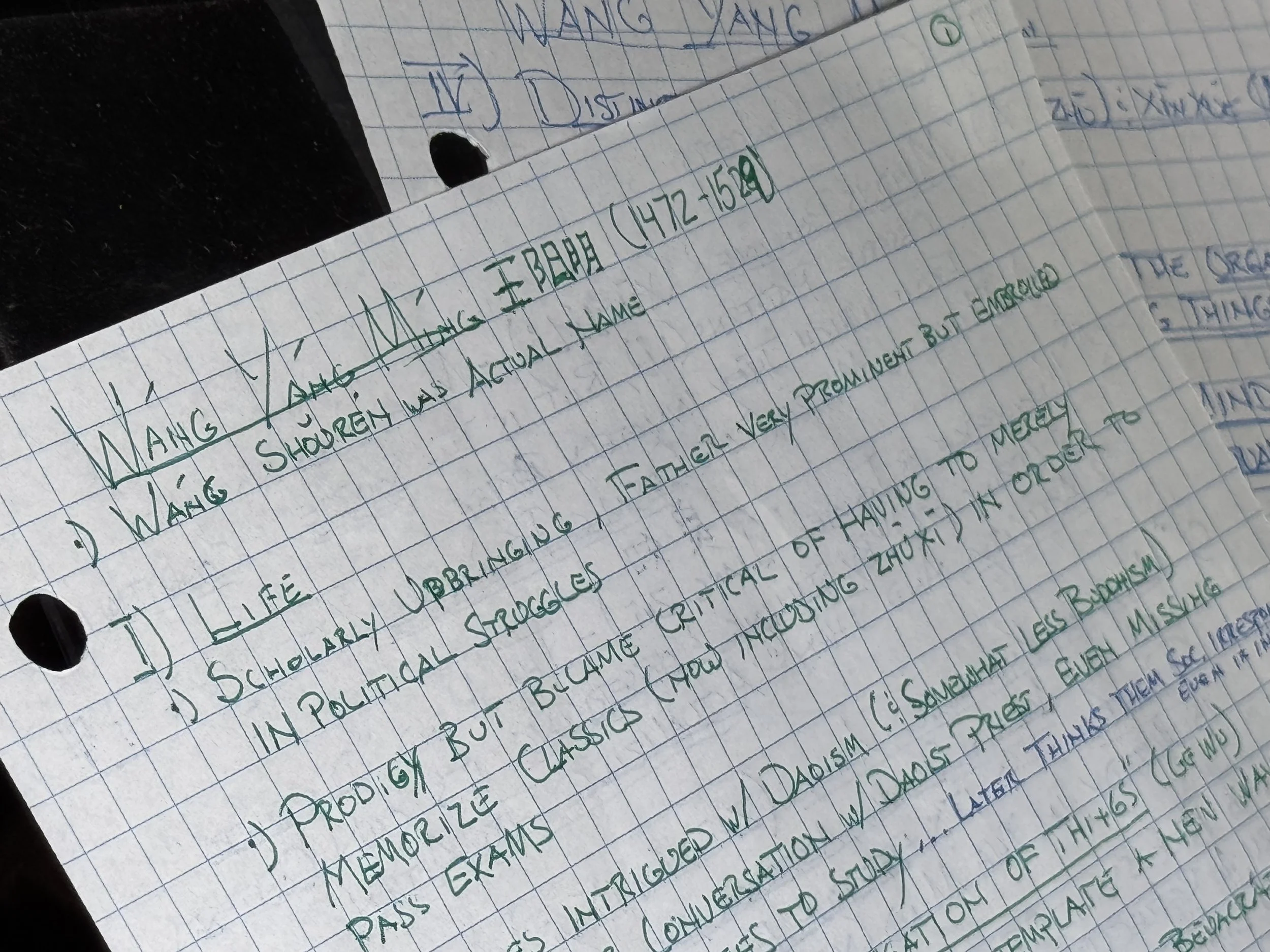
Even more than that, though, is the way that Chinese philosophy looks at and critiques the contemporary world that we share. Chinese philosophy has always seen human civilization and human experience as something to be understood in terms of relationships, rhythms, and cycles. History is not so much a stumbling but relentless march towards improvement and perfection the way it’s often understood in the post enlightenment West. Rather, Chinese thinkers tend to see history as a series of swoops and swirls in human experience that invert and compound upon themselves in the endless yet recursive process of becoming. This in turn means that so many of the things we see happening now - in politics, in science, in culture, and even in human understanding - are looked upon as points within very great arcs of human activity. There are things that have their origins in longer and deeper arcs of human values, human ambitions, and human nature itself.
The world is a perpetual becoming in Chinese thought. It is, at once, the ongoing appetite, vision, and movement of human experience and relationships happening in every instance of our being. If we wish to realize what it has to offer, then we must do more than just react, or plan, or control, or even understand the world around us. What we need to do is appreciate and participate in this much larger scope of values an experience that Chinese thought takes as a given - that aspect of the world comes from the past, the hidden, the concordant, and the sublime to make up the now. It is only then, the sages and thinkers of this tradition say, that we will see things with the clarity, depth, meaning, and truth that the world deserves. And it is only through that that we can come to be what we might hope to be.
