
Oct 18, 2026 · @Gad
Scoundrels Philosophy Club, Wednesday, October 14 · Saturday Scoundrels, Saturday, October 17
11 Scoundrels on Wednesday, 6 on Saturday. (I counted. Seth, feel free to submit your own figures.)
Great to have Jon L in the mix, who is a different John from John N, and to John R on Saturday, who is a third John, an amazing calligrapher, and a big fan of etymology. Welcome to Brett and Jenny on Saturday. Jane brought a friend, hi Carol! Bob was back in the house on Wednesday, complexity flag at rest, but ready to argue, and Wendy was back for her second Saturday in a row.
This week we asked what a conversation is. Which means for ninety minutes, twice, we had a conversation about having a conversation, and I spent both of them trying to write down a conversation about having a conversation. My life is a hall of mirrors. A fun one. I'll also admit up front that there were moments when Seth was building an idea faster than my pen could follow, and you'll see a gap or two where that happened. Fittingly, forgetting turned out to be one of the themes of the week.
Also, I’m running longer than usual here. Another theme of the week - slowing down enough for the noemic to be possible (don’t worry that word gets defined when it comes up!)
Seth Opened the Door
This question started at Wit & Wisdom the Thursday before, where Seth and John Nygaard talked through what a conversation even is. Seth and John are friends who don't always see things the same way, but they listen and talk things through together. Something Seth loves about John is that John believes in the power of conversation to bring a community together (I mean, I like it too, but I wasn't giving the kickoff - just taking notes ;). Scoundrels is a chance to open that talk up to more people, cause you know that's kind of what we do. Some of us were at Fort George, some of us weren't, and Seth wanted to hear what had been brewing either way.
For those who weren't there, he gave us some hooks. What is a conversation, and what isn't? Is it simply speaking? Is it being heard? What are the ingredients so to speak? If a conversation is significantly different from chatting, debating, or gossiping, what is the difference. And does the difference change our thinking on a deeper level?
What's required? A point of view, sure, but what else? A disposition? A time? A place? What do we have to do to have better conversations? Are there protocols, or a style or approach? Do we need trust? Is it the physical environment, or some combination of all of it?
And what do we hope for? What does a conversation achieve? There seems to be a lack of good conversations in the world right now, and that seems to point to something. Is a conversation transformative? Does it change us together? Does it change the world?
On Saturday, Seth offered the same pitch, boiled down to three questions: what goes into a conversation, what's required of us, and what do we hope it will do? (he said more than that obviously. I just figured out the structure by Saturday)
And then, he let us loose.
A quick reminder for anyone new: I group these reflections by the themes I see, not in the order things were said. This week I've taken that further than usual. A few Saturday ideas come early, because once I lined the two conversations up side by side, Saturday kept shedding light on things Wednesday wrestled with. And I told y'all this is a new adventure for me too. Let's see where the themes take us!
Like Riding a Bike
Partway through Wednesday, Seth said conversations seem a little like riding a bike. There's balance, and there's movement, and you need both.
Chani loved that, because it implies there's a skill to it, and skills can be learned. We learn to write, to talk, to spell. We're taught how to produce language. And reading teaches us more than reading: it teaches listening comprehension, how to hear someone else's points. When we learn to analyze language on a page, we're also learning to analyze the language we hear.
If conversation is something you get better at, then a lot of what we said on both days was really about practice. Not practice the way you'd practice a sales pitch, with a goal and a script. Practice the way a musician practices, or the way people talk about a meditation practice. Something you keep doing because doing it is the point, and you never quite finish. There's a long tradition of thinking about philosophy itself this way, as a practice you live rather than a subject you learn. (Pierre Hadot wrote a whole book about it, Philosophy as a Way of Life, if you want a rabbit hole.)
So that's the lens for the rest of this reflection. Where do we practice conversation? What gets in the way? And what does it do for us when it works?
Practicing on Yourself
The first place you practice might be your own head.
On Wednesday, Chani wondered whether you can have a conversation with yourself. She thinks so. She'd just been talking to herself on the way to Scoundrels about a dog she came across, trying to decide whether it needed rescuing. She thinks talking to yourself is important. When she was working on her master's degree, she did her best work with another person in the room as a sounding board, but mostly she was talking to herself. Occasionally the other person added something. Mostly, having another body there helped her think out loud. That felt like a conversation with herself, and an important kind.
Seth said he talks to himself all the time. (I can vouch for this. He does.) Then he wondered: if we do have conversations with ourselves, that must tell us something about the nature of conversation. But what? Chani thought it helps us reach deeper, unconscious thoughts. It takes conversation to get to deeper places, and it shows us the theme of the train of thought we're on.
On Saturday, Brett brought up the same question without having been there on Wednesday. Can we have a conversation with ourselves? He thinks yes. There are constantly issues in life that different parts of his consciousness are working out.
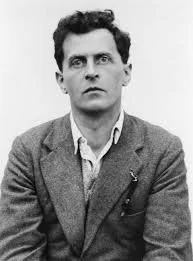
Seth brought in Wittgenstein, who has been popular lately, guys. Wittgenstein asked whether a private language is possible, meaning a language only one person could ever understand, with words referring to private sensations no one else could check. He concluded it isn't. Language is shared by nature. So even when you're talking to yourself, you're not sealed off in a private room. You're talking among different parts of your mind, using tools you got from everyone else.
Wittgenstein
Ethan pointed out that we can surprise ourselves. His therapist shared a technique for dealing with being stuck in deep indecision, use this question: if you knew you'd be just fine with either path, which would you choose? You can discover things in yourself by conversing with yourself. He also brought up a concept for our mental framework, a kind of rule book we use to respond to things and process ideas. I looked around for the word, and I think he meant cognitive set. (Ethan, let me know if that's the right term.) His point: when we have a conversation with someone, we're letting them move around in our framework and poke at it. That has the power to shift how we think and act from then on.
Brett thought about authors, who build characters and then let them talk to each other. That might be a little like talking to yourself, and it might go further: through their characters, an author can have a conversation they wouldn't otherwise have, taking on views they don't hold or barely know. That reminded Seth of J.M. Coetzee, who famously doesn't explain the point of his writing. Once the book is in the reader's hands, the grappling is up to them.
For Sara, this sparked a connection to naming emotional reactions and picturing them as a person. Give an anxious reaction a name and a face, and it's easier to have a conversation with that part of yourself and shift how you end up behaving. Ethan saw something similar in framing: I'm experiencing an anxious thought lets you converse with an emotion in a way I'm anxious doesn't. Seth called these different maneuvers for a similar experience.
Along these lines Sara wanted to "witchy woo woo" a little. (Her term. I like it.) She's not sure how she thinks the cosmos fits together, or what using something like runes, tarot, or astrology is really doing.
Seth: "Ah, an adamant agnostic."
Sara: "Maybe."
Seth: "Even better. A meta-agnostic."
When Sara uses runes, she thinks of them as a way to reach her subconscious. They're tools for having a conversation with herself, a way for the front of her mind to draw on a part it can't reach directly.
Seth saw something recursive here: even a mind in conversation with itself can generate new possibilities. That speaks to the emergent quality of conversation. Then he asked the group whether it would be correct to say that every conversation is a conversation with yourself.

Ethan was already thinking along those lines. In any conversation, we can only experience what we're able to take in. That's all we ever get to interact with.
And Jenny, a naturopath, said she's leaning toward the idea that she's in conversation with herself all the time, but with the help of everyone else. We reach to others for comfort and reassurance. Even when we push an idea away, it still helps us, even if we don't get it yet.
Wait, What Was I Saying?
Bob wanted to talk about memory. When he first started coming to Scoundrels, he tended to talk as soon as an idea popped into his head, mainly because he couldn't remember what he said ten seconds ago. He thinks when a new idea is in front of him, his brain pivots into exploration mode, and by the time he's called on, he's often forgotten what he wanted to say. (He just got back from the East Coast, where he took pictures of everything so he'd remember the trip.) He thinks about kids in school who've forgotten their question by the time the teacher gets to them. He's noticed some people at the table take notes and wonders how helpful it actually is.
Mike also forgets what he wants to say. His strategy is to ignore it until somebody reminds him what he said, and then use it as a chance to argue. He was teasing us. Kind of.
On Saturday, Brett lost his train of thought before we got back around to him. Bob and Mike feel that, Brett.
I shared something from my own experience. Practicing philosophy is what strengthened my working memory. In philosophy, you have to take the time to first hear the definitions, then learn how the defined ideas relate to each other, and then sometimes how those relationships relate to other relationships, and so on. Elephants all the way down. Over time, practicing that made it easier for me to hold on to my own idea without interrupting with it. I think I learned to hold my ideas a little more lightly. I didn't have to clench an idea in my fist and throw it right back into the conversation. I could set it in a basket. And once it was in the basket, I realized I had a choice about whether I wanted to put it back into the conversation at all. That choice came from learning to collect my ideas before tossing them back.
Mark brought up Bob's musical ability and the jams the two of them have had. Mark didn't bring up his own musical skill, but oh my, can he jam. Mark is a brilliant musician, and I'll admit I have a particularly soft spot for him because he can absolutely kill it on the flute. When I was a kid, I thought the flute in a piece of music sounded like the icing on the cake. But back to Mark's point: when you're having a musical conversation, you can't be worried about what you're going to say next. You're entirely in the moment.
Maybe taking some notes can help you hold an idea. A jam releases the idea of holding.
Waiting for Your Turn
Jon L got us started on Wednesday with this: it's a conversation when it's not a lecture. Pausing between points and giving the other person a chance to respond is what makes it a conversation. If they never get that chance, or you tell them "I'm not done yet," that's a lecture. The other mind receiving what you say has to get to bring itself to the exchange too.
Dale was still chewing on that later in the evening. A lecture isn't a conversation because there's no exchange, and everyone has to listen for a conversation to be possible. For him personally, as soon as he hears swearing, he's out. He's not listening or processing anymore. And as soon as somebody's just waiting for their turn to talk, they're not in a conversation either. Then it's just two people making noise.
Mike remembered something from the Wit & Wisdom talk: it's hard to listen when topics get too mild or too heavy, and listening without working out what you're going to say next requires trusting yourself to be able to respond when it's your turn. I think Mike showed us an element of fear that’s happening when we’re not listening and I don’t think we usually consider that.
Seth wondered why that's so hard for us. (“That” is listening without thinking up what we want to say)
Mike: "Because we want to win. In Jersey, anyway."

We all chuckled and cracked a few jokes about Jersey, then got back to why is it so hard to listen and converse? Chani thought it links back to tribalism. Seth wondered if courage or intentionality is involved.
Here's where Saturday might shed some light on Wednesday's tangle. Ethan thought about the prerequisites for a conversation. First, you have to have a sense of another mind. (Part of what's hard about social media, he said, is that you don't really get a sense of the other mind.) And second, attention. Without attention, conversation suffers, and anytime you pay attention to something, you're already starting a conversation with it. Put that next to his other point, that in any conversation we can only take in what we're able to take in, and Dale's two people making noise start to make sense. If you're busy waiting for your turn, your attention is on your own next line. There's no room left to take in the other mind.
Sara was interested in depth. For her, engagement stands out when we go beyond "how's the weather" and meet someone's mind below the surface. Seth asked whether she'd call that care. She said yes, she thinks she would.
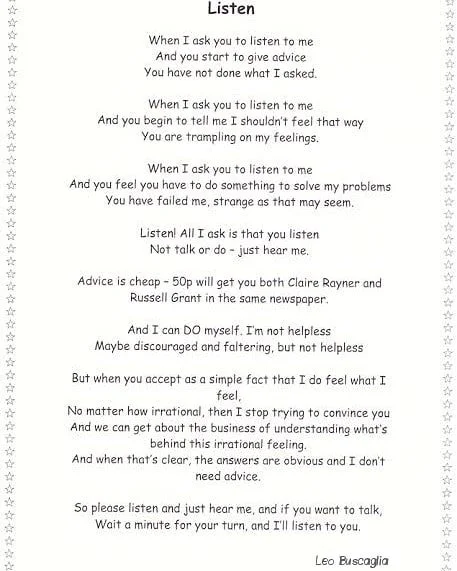
Jane shared a poem she uses in her mediation work, called "Just Listen." Its essence is that being part of a conversation means both people have a voice, and that our job is often to listen, not to correct or solve or help. We live in such a fix-it culture that we think we always have to do something. Whether it's a ten-year-old or a thirty-five-year-old poet talking to the wind, what people want is to be heard.
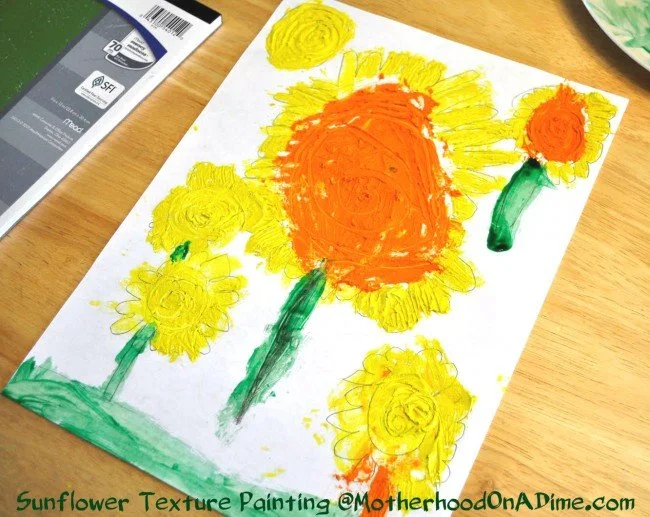
Carol lifted up how often kids don't have a voice. She worked with grieving children, and practicing pure reflection, a technique for showing a child you're listening by simply describing back what you see, was much harder than she expected. She gave an example. A child shows you a drawing of a flower. If you say "What a beautiful flower!" you've placed your own value on it before you've understood it. If you say "I see a yellow flower," you leave room for the child to tell you what it is. And sometimes what it is is a flower on their mom's grave. That changes the whole conversation, and whether the child feels heard. Something important gets lost when we judge before we reflect.
Who Started It?
Jane was interested in the difference between the person who starts a conversation and the person who's invited into it. The one who starts it usually holds the power. The one invited isn't always sure of their space, their role, or how much they're allowed or expected to participate. Jane isn't sure that imbalance ever fully goes away. When there's a pause, it's usually the person who started the conversation who finds a way to keep it going.
So I asked her: you were invited to this conversation. How do you feel right now? She said she tends to fall into pleasing mode when she's invited in. She also noticed she's less likely to step into an exchange that has turned into an argument.
Which brings us to Bob. Apart from everybody knowing his fondness for complexity, he said, the other thing he does is argue. He grew up with arguing as a form of conversation. There's a deep tradition in Jewish learning of debate and contrarian back-and-forth as a way of studying, and Bob likes arguing because he likes to learn. It has not gone over well on the West Coast. Out here, he's discovered, arguing feels personal. It reads as rude rather than as a way of communicating. So there's a cultural side to what conversation is, and figuring out how to engage someone without alienating them right away is part of conversing too.
Seth wondered why arguing works as conversation in some situations and turns people off in others. Bob thinks it's culture and history. He grew up in a house of constant arguing. His wife wasn't raised that way, and to her, being argued with can feel like being talked down to. He brought up how women have had a hard time being heard, and how Jane can vouch for a time when women were mostly allowed caretaking roles. I chimed in that that's totally changed now. (Devil horns, devil horns.) The group chuckled. Bob added that his kid thinks his parents' arguing was a lot of hooey, but would probably think differently if he'd grown up somewhere else.
Chani's take: an argument can be a conversation as long as it has the right intent. On the West Coast, arguing tends to signal different intentions, and that's what makes the difference.
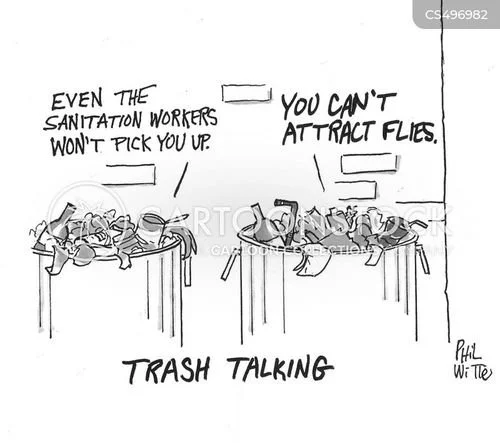
Jim talked about intention too. Did you come to inquire, or to talk about yourself? He liked Jane's point about initiators, and how you can feel trapped if the person who started things isn't good at it. When he first moved here from Chicago, he was a little too Chicago. He's a big sports fan, and smack talk in Chicago looks a lot different than it does here. Early on he told a local, playfully, exactly what he thought of their team, in four letters. It did not go over well. He realized he'd have to learn to trash talk all over again if he wanted to stick around.
Ariane compared conversations to games. When everybody knows and agrees to the rules, it's easier to relax and enjoy playing. When she travels, she runs into different rules for conversation everywhere and has to adapt. At Scoundrels the rules are clear: Seth is the host, and nobody has to fight to be heard. Most conversations don't have someone keeping that kind of peace. And language sets rules too. In German, the verb often comes at the end of the sentence, so you have to wait to hear someone's whole idea before you know where it's going. It's built into the grammar.
Seth reflected on the conversations we've been hosting at Scoundrels over the years. He thinks conversations need rapport. We have to go into them intending to build something together. Leaving it to chance, where everybody talks whenever they like about whatever comes up, sometimes works, but it almost never leads to building something together. And we're learning to share phrases that keep a conversation going instead of shutting it down, like I see it differently.
Which brings us back to the Dodgers. Mike said the only thing he remembered from Thursday's talk was the moment Seth got applause, for an idea about how people are often in quasi-conflict, thinking they're further apart than they are. He asked Seth to say it again. Re-performing your best moment on the spot is no small thing, but Seth found his footing: we can disagree with how another person holds an idea and still be curious about how they see it, instead of flinging names at each other. Without that curiosity, we start to lose our democracy. He finished right as the Dodgers scored on the screen at the front of Bridge & Tunnel, and the bar cheered. Two rounds of applause for Seth. Jim announced that the Dodgers are evil. Mike said, "I see it differently."
The phrase is catching on.
Small towns and big screens
The rules change again depending on who's watching. On Saturday, Brett thought about road rage. In a big city you don't think twice about flipping someone the bird, but here, the odds that you know the person who cut you off are a lot higher. Clatsop County Rants and Raves will out you quickly. Wendy summed it up: so the audience is a factor.
And then there's online, where the audience is everyone and no one. On Wednesday, Danae saw how much tribalism is making it harder to have conversations when people disagree, and the internet makes it even worse. People are nasty online in ways you don't see as often face to face. Seth said what's hard, in any culture or situation, is learning how to take each other's interest and sincerity seriously without assaults or outbursts.
Bob, who used to write for Hipfish, finds social media makes replying easy, and he thinks even writing back and forth has a lot of room for learning. Seth agreed. He's seen wonderful conversations happen through letters.
On Saturday, Brett wondered what makes some online conversations useful. He's on various platforms, and different comment boards have different cultures. Some lose focus and get mean quickly. Others manage to get deeper. He wondered about the role of moderators and gatekeepers, and what helps. Ethan's experience is that it takes about three interactions online to coax a person out of reactive responses. A conversation can happen online, but the invitation takes longer for someone to recognize, and they might not accept it. They might just ghost.
Seth thinks one of the great advantages of talking face to face is all the extra context we're constantly receiving. You can get there with letters or text over time, but it takes much longer for the conversation to become as rich. On Wednesday he'd put it this way: two people face to face is the easiest conversation to have. Add more people, add time between letters, add a screen, and we start seeing more ersatz conversations, more counterfeits.
Hot Take
〰️
Hot Take 〰️
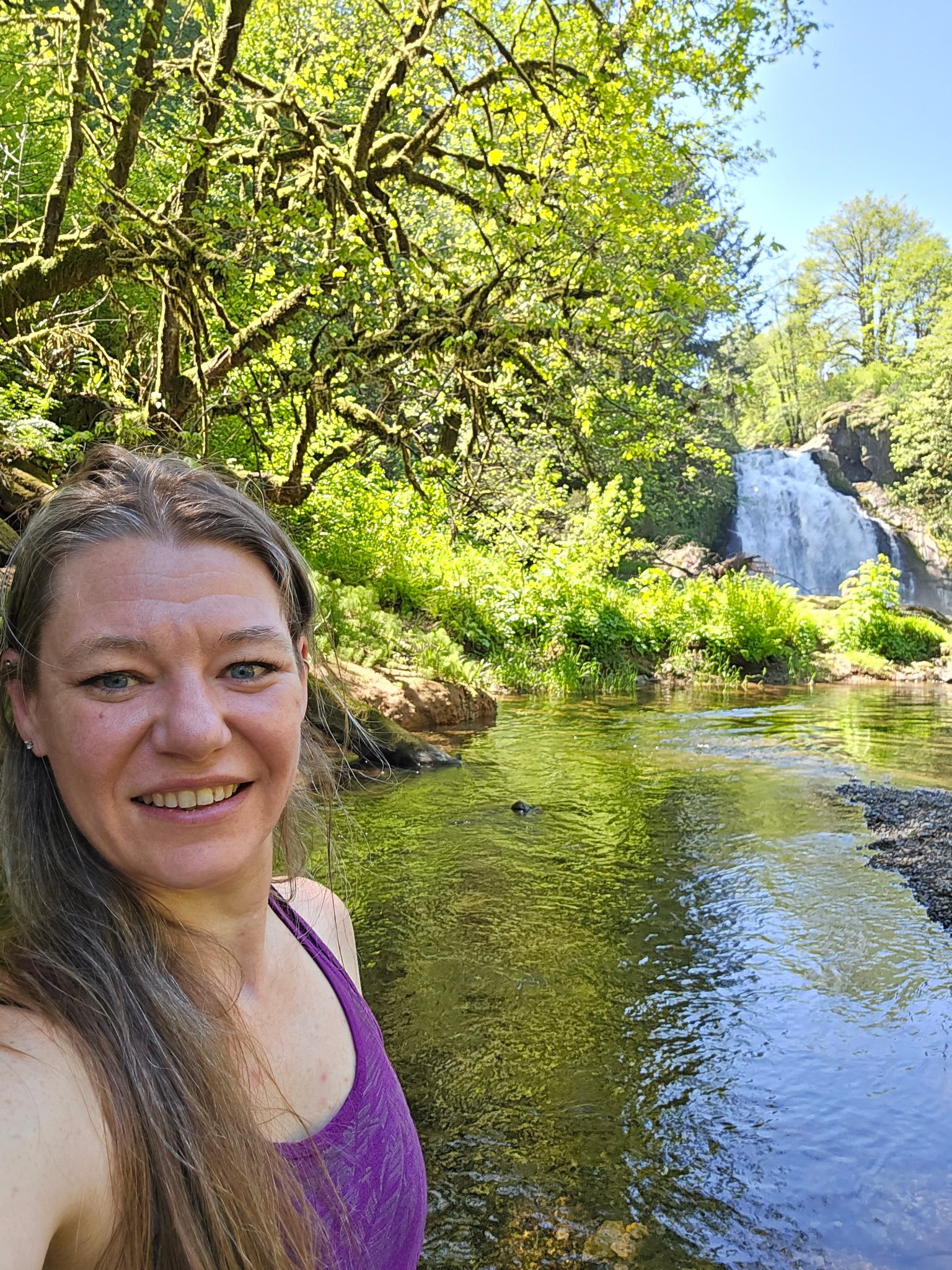
Sara was with us on Saturday. Listen to her hot take on our conversation below.
Hot Take
〰️
Hot Take 〰️
Is This Practice?
On Saturday, Ethan said one of the prerequisites for conversation is shared symbols and experience. Seth asked why (sometimes philosophers are like two year olds). Ethan wasn't sure you could have shared symbols without shared experience, so maybe experience is the deeper requirement. Seth brought up Paul Tillich, who thought a lot about symbols. For Tillich, a symbol does two things at once: it participates in the reality it stands for, and it points beyond it. Maybe symbols are part of what gives conversation depth and texture.
Sara wanted to test that in Witchy Woo Woo world. On Facebook, someone might post that they dreamed about pigs and ask what it means. Her response is: well, what do pigs mean to you? Pigs hold such different places for different people, depending on your experience, where you live, your culture. Maybe they're filthy, stinky animals. Maybe they're delicious. Maybe they're intelligent, delightful creatures. So how much shared experience does a conversation need? And how much of it is just built into being human?
I responded that I think what we call shared or lived experience often gets narrowed down, shaved into something much smaller than it is. Just by being human, we share an enormous amount: we have bodies, bodily processes, similar ways of moving through and thinking about the world. Beyond our species, we share a planet, and everything on it shares the experience of being here. You can take that out further, to a galaxy, or as Buzz Lightyear would say, to infinity and beyond.
Sara feeds crows, and she uses the same whistle every time before she feeds them. Her kiddo thinks of it as calling the crows. Sara doesn't see it that way. She's announcing that she's there; it's just her sound. She doesn't think it's a conversation, but she also does think it might be. Seth thought it depends on how things proceed. You make a sound, they make a sound. Your body moves a certain way, and so does theirs. Is there a ritual to it? A cadence? It's possible it's a conversation.
She unpacked it some more. On hikes, she announces herself to the ravens, and they know her sound. She always has food to share. When other birds are singing in the trees and she whistles back, is that a conversation? She doesn't know what they're thinking. Her dog, on the other hand, is very well trained, and she has been very well trained by her dog. Does the dog know her by her mannerisms? The words? The time of day? Her clothes? Other behaviors?
I thought this was so awesome, because of what Jane said last week (insert link to post) about being trained by the animals we choose to have relationships with. Sara hasn't read that post and wasn't at the Wednesday conversation. It's fun to see the same idea show up in totally different contexts, from people who haven't met. And her thinking was following last week's thread in its own way, from understanding nonhumans to conversing with them.
Seth loved her example. He thinks it becomes a conversation when you begin conversing. Then he said a lot of smart, deep things that outran my pen, which is maddening when every connection matters to where he lands. What I caught was the ending: an idea about what we come to understand over time. Hold that thought. It comes back in the next section (it’s noemic in practice, i’m so pleased with myself right now, lol).
Ethan connected Sara's crows with a study he'd read about falcons: they can tell individual humans apart, but we can't tell individual falcons apart. Then he got playful. We could run a false flag operation on the crows, wearing a mask of an enemy and behaving badly in their neighborhood to turn the crows against them. (Please don't, anyone.) But he also saw something lovely in all of it, a way to get beyond ourselves. Seth agreed: it expands us in ways we couldn't manage alone.
And then the rocks! Brett said some conversations don't go far or do much, like talking to a rock. (It wasn't me this time, folks! Also, I'm not alone!) We don't get much from that. Maybe the rock erodes at us a little if we hang around long enough. Its speaking time is just too long for us to get much from it, which is another way the audience, us in this case, makes a difference.
Seth was glad Brett brought up rocks. If we imagine a shaman speaking with a rock, the shaman might experience that conversation differently, because they stand in a different relationship to the rock. Seth kept seeing conversations happening on different levels, everywhere, all the time, wherever intention and attention come together. Online, he said, we've got everything and nothing at once. There's attention there, but without the emergent back-and-forth of being together, it can't do what conversations do face to face.
Is a moving mud puddle trying to converse?
Is whistling to a raven practice? What about whispering secrets to rocks?
The Slow Part
Near the end of Wednesday, Seth told us about a workshop he went to with Oregon Humanities, where they covered the importance of silence, and how it doesn't need to be filled. Conversations proceed when they can, but you can't force them. Trying is like trying to provoke a catalyzation, and when you do that, the conversation can't be what it is. "We all have different metabolisms," he said.
Metabolisms. Some people digest an idea in a second. Some need a week. Some conversations need a long silence before anything can happen at all.
Saturday got to silence almost immediately. Wendy said silence is where she learns a lot, from what people don't say. Later she brought up the idea some musicians hold, that music is the silence between the notes. John R thought about the tango teachers in town. ("Oh yeah, the tango twins?" Wendy said.) When you're learning to tango with them, there's no talking allowed. It's a physical conversation.
Mark had a silence story too. He'd recently taken the train home from Seattle after the team lost, and nobody wanted to talk. There was an unspoken agreement to just enjoy the ride rather than rehash the game. Silence, by consensus. He also said some of the best conversations of his life happened between midnight and 4 a.m., bombing down the highway in full-on imagination mode. Seth asked why these in-between, liminal spaces work so well. Jim thought it's because you're more vulnerable there.
And then there's John R's Zen retreat. A week of meditating in silence. One week closer to Nirvana, as he put it. But one man on the retreat hated it. He was an ornithologist, they were out in nature, and he was surrounded by the nonstop cacophony of bird conversations. For him it might as well have been a silent retreat with rock music blasting in the background.
"Talk about perspective," Wendy said.
Turning round with
John R loves etymology, and he was surprised by how far back the word conversation goes, further than yakking or even dialogue. So we looked it up and read it together, which is about as Saturday-morning-at-The-Catalyst as it gets.
Here's the short version. Converse comes from the Latin conversari, which meant to live, to dwell, to keep company with. Literally, it means to turn round with, from com, together, and vertere, to turn. When the word came into English in the 1300s, it meant to move about, to live, to behave a certain way. The sense of talking with someone didn't show up until the late 1500s.
So before conversation was talking, it was living with. Turning around together. Keeping company over time. You don't dwell with someone in an afternoon.
Noemic (like I promised)
On Wednesday, Seth taught us a new word: noemic. He said it's Greek, obviously, to which I echoed "obviously" in my poshest voice. A little good-natured ribbing. As Seth taught it, noemic describes something that comes to make sense, but only over time - it’s a specific term in phenomenology. He thinks the most powerful conversations and the deepest listening are noemic. They take time, patience, listening, and stillness.
On Saturday, when Seth wrapped up his idea about what we come to understand over time, I parroted "noemic" like the bird I was and got invited to define and spell it for the group. A word for things that make sense over time, traveling from Wednesday to Saturday. I'll take it.
Fusion of horizons
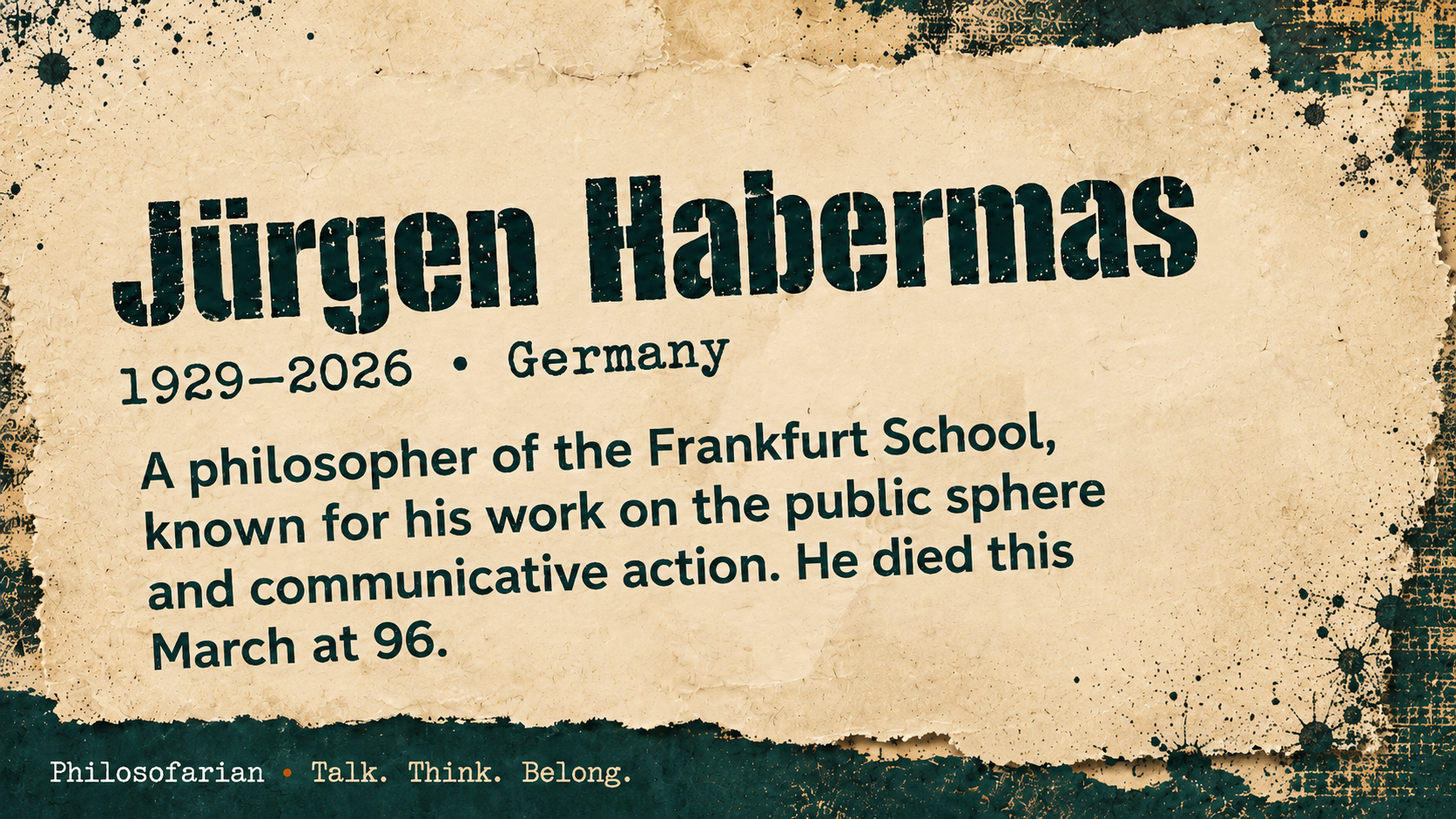
Both days (all three if you count Wit and Wisdom), Seth brought in Hans-Georg Gadamer, a 20th-century German philosopher who wrote Truth and Method. Gadamer described conversation as a fusion of horizons. Each of us has a horizon, the edge of what we can see from where we stand. There are things we take to be true, and our horizon is fuzzy and far off and hard to see past. In a real conversation, two people's horizons come together, and suddenly you can consider ideas you never would have alone. On Saturday, Seth was clear that this isn't about agreeing. It's about discovering that something that never occurred to your mind is out there. And it takes a lot to build the kind of environment where that fusion is possible.
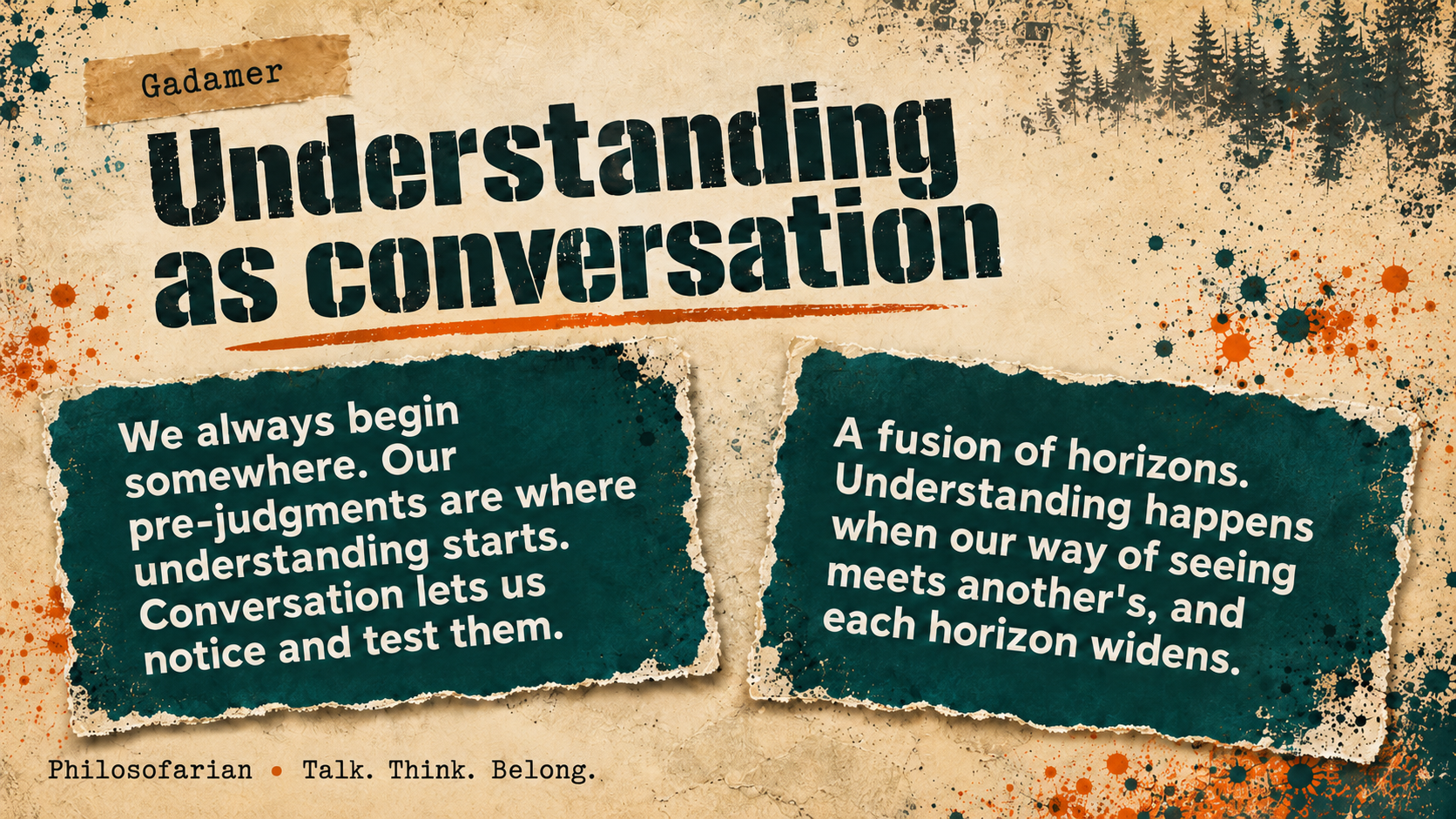
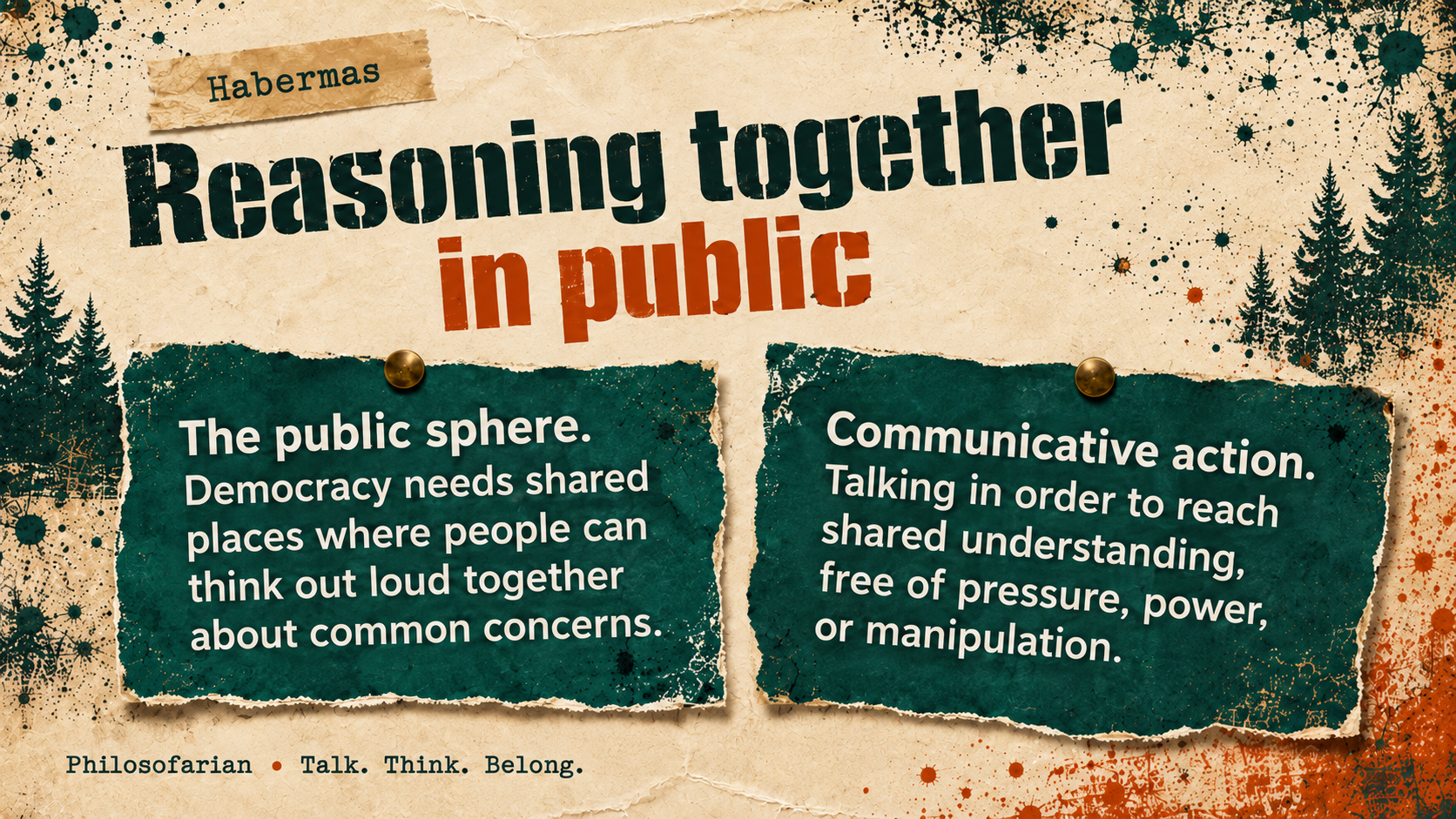
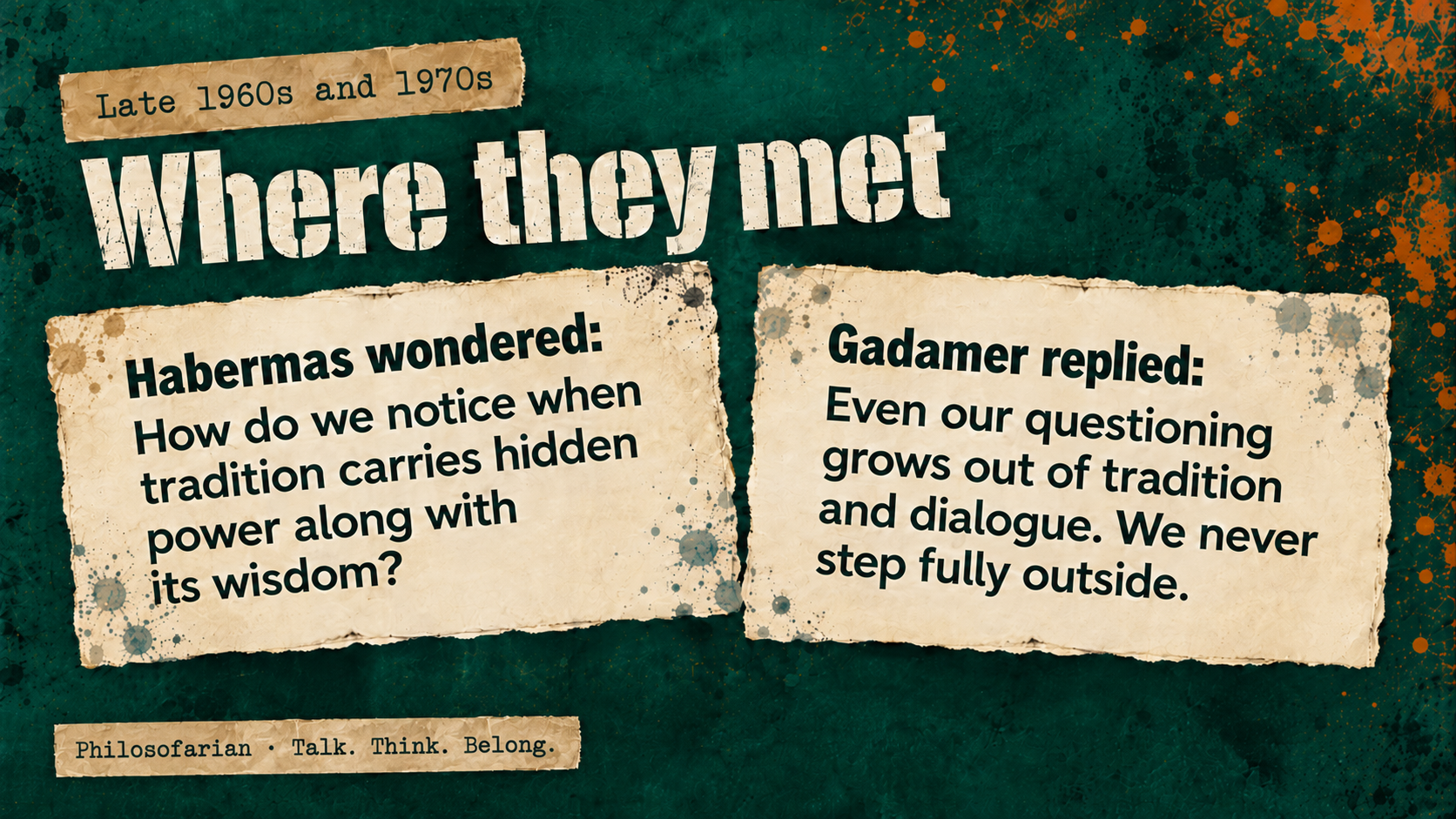
Ethan said that's what philosophy does all the time. Before talking to a philosopher, you might never have considered why you believe there's a physical world at all. Then someone offers a bunch of reasons that fit together for why maybe there's no reason to think so. You encounter an idea that had never occurred to you, through a conversation. It might just happen more often around philosophers.
Ariane loved the phrase, “fusion of horizons.” She thought about harmony in music, how it merges and connects, and how getting to the deeper levels of a conversation means feeling you can harmonize. She listens to a French podcaster whose generosity with his own fragility takes his conversations deeper. For her, it's thinking together, which is why the music metaphor works: great when it's happening together, awful when it isn't. And isn't it interesting, she asked, how some conversations leave you feeling smarter and others leave you feeling dumber?
Not rushing
Jenny pointed to research from the HeartMath Institute on how our thoughts and behaviors relate to heart health, and in her practice she suggests small inner conversations, like asking your heart a question and staying open to what comes back. She reflected on the line: let me not love my beliefs more than people. In her work she often meets nervous systems very different from her own, and it's rarely a "yes, and," like improv. More often it's a "no" or a "but." What helps most, she thinks, is recognizing that what’s difficult has the power to move us toward something, if we can figure out how to not contract away. And the idea that all conversations we have are, in the end, conversations with ourselves can really help with getting a foothold on how to stay open.
…there was a whole different version of this reflection where I really dug into the theme that all conversations are ultimately with yourself. Saturday Scoundrels kept circling this concept. So many ideas, so many interpretations, so little time.
Seth thinks this is why conversations need time. It's important not to rush to the point, or to be hard on people to finish quickly or decide (imagine marital disagreements).
Ethan fit together the experience of conversations with our ability to act and what that might imply. We can take in news from all over the world and do nothing about it. News from our village, we can do something about. Maybe a conversation isn't powerful if we can't have any effect, and the only outcome of a conversation we can't act on is feeling upset. Thought about that way, he said, it points toward having fewer conversations, with more time between them. Philosophers aren't only for thinking thoughts he said. They're for working through life.
Sheesh, get Ethan an honorarium.
Conversation might help us navigate the shadow that mystery forms at the edge of human consciousness. It's hard to stay present to the mysteriousness we're always surrounded by. Maybe conversation is one natural way we do it. Maybe using conversation to embrace the shadows is part of what makes us humans.
2 Rooms + 2 Groups = One Question
Plenty showed up in both rooms. Talking with yourself came up on Wednesday with Chani and again on Saturday with Brett, who hadn't been there for the first round. Gadamer's horizons fused twice. Screens frustrated both groups. And Seth's case for taking time ran through both days.
We came to silence from different trajectories. Saturday got there almost right away, with Wendy's second comment of the morning. Wednesday arrived near the end, through Seth's workshop story, after an evening of arguing, forgetting, trash talk, and a Dodgers cheer.
Something I noticed as I took notes on each experience was each group practiced the thing it was talking about. Wednesday, eleven people strong, spent the evening wrestling with turns: people forgetting their point mid-wait, Mike asking Seth to re-perform his own best moment, a ballgame cutting in, and "I see it differently" turning into a Dodgers joke. Saturday, six people around a table at The Catalyst, read an etymology out loud together and followed Sara into witchy woo woo world. Turning round with, and dwelling with.
Is that a Wednesday-night thing and a Saturday-morning thing? A bottle shop thing and a coffee thing? Eleven people versus six? Ask me again in a few weeks…I probably won’t know. And you know we Philosofarians always recommend asking more questions anytime you’re giving a dichotomy - no matter how rhythmic it is in writing.
Half-Baked (Still Rising)
Is every conversation a conversation with yourself?
Does a conversation need to be meaningful? Why do we have them? What are they for?
What are the consequences of a conversation that isn't useful?
Without a persistent connection, what do we take away?
Does the person who starts a conversation always hold the power?
Why does arguing work as conversation in some places and turn people off in others?
Do moderators and gatekeepers help conversations, or get in their way?
Is whistling to a raven a conversation? What about talking to a rock?
What We Know We Don't Know
Wednesday ended with Mike. He started talking about how when we connect from opposite ends of where we're each at, that's kismet, a kind of spiritual connection, a fusion of souls. He was clearly about to get on a roll. And then he said: "Damn. I forgot."
I’m still trying to hold my ideas in a basket instead of my fist. And letting a silence sit a little longer than is comfortable for me. (I'll let you know how that goes. Seth will probably let you know first.) And remembering that how fast someone takes in an idea is their metabolism, not their measure.
On Wednesday, Bob said he really likes these reflections, because they invite people to keep talking after they leave the table. You can still participate, even if you weren't there, or forgot what you were going to say. That made me think about what John R found in the etymology: before converse meant talking, it meant turning round together and keeping company over time. Which could mean this reflection is part of the conversation too. Wit & Wisdom took a turn. Wednesday took a turn. Saturday took a turn. This post is mine.
The next one's yours. Will you take a turn? Will you dwell? Something else, perhaps?
50 Cent Philosophy?
Also, we keep picking up new words. Effulgent two weeks ago. Coeffulgent last week (okay, I made that one up). This week: noemic, fusion of horizons, liminal, ersatz, and meta-agnostic. I'm wondering about a little recurring column, maybe a monthly roundup of the fifty-cent philosophy words we've learned together. 50 Cent Philosophy. I do take copious notes. What do you guys think? Should I track them?
Your Turn
Where have you had the best conversation of your life? (Mark's vote: a highway, sometime between midnight and 4 a.m.) Have you ever had a real conversation with an animal? With yourself? Is there a silence you've learned from? Reply to this email, leave a comment, or bring it to the table. I'll read every one.
Shout out to my quiet one this week. I loved chatting with you later in the evening, Eric!
This week at Scoundrels: Why is ritual important?
Scoundrels Philosophy Club: Wednesday, October 21, 5:30pm, Bridge & Tunnel Bottle Shop.
Saturday Scoundrels: Saturday, October 24, 10 to 11:30am, The Catalyst, 264 W. Marine Drive. All ages. Coffee by Cambium Gallery and Coffee Bar.
Bring your turn. Bring your silence. Bring whatever you forgot you were going to say.
Come think with us.
This program is funded in part by Oregon Humanities with support from Meyer Memorial Trust. Any views, findings, conclusions, or recommendations expressed in this publication do not necessarily reflect the views of Oregon Humanities and other sponsors.
