
Is There a Hierarchy to Morality?
Scoundrels Discussion — 3.18.02026
Last night we talked about whether there's a hierarchy to morality, and the kickoff was different than usual. Seth started with technical things. We started with definitions, guys. That almost never happens.
Twelve of us in the room. Lowell—welcome to Scoundrels!—joined us for the first time. Tonia couldn't make it because of her second job, but this was her question, so she texted me her thinking. More on that in a minute.
Bob sat down next to me and when Seth got to the part about the question being rooted in the metaethics of metaethics, I heard Bob whisper to himself: "Metaethics squared."
I love this group.
Descriptive, Normative, and Meta-Squared
Seth started by talking about levels of ethics. There's descriptive ethics, normative ethics, and metaethics. What the heck are those things?
Descriptive ethics are those workshops HR makes us do every year. You should do this. You shouldn't do that. Specific things to do and not to do. But descriptive ethics still need to be grounded in something. Like, why shouldn't you slap your coworkers ass?
That's the territory of normative ethics. Normative ethics talk about general principles or rationales or patterns. But even then, we still need to understand what makes the principle meaningful. And that's where you get metaethics, also referred to as axiology. That's where we start dealing with the fundamental reality of what we're dealing with. Asking a question like: how real is value? So it creeps into the metaphysical or ontological areas of philosophy as well.
The question of the evening is rooted in the metaethics of metaethics. Hence Bob's whispered "metaethics squared."
Next, Seth offered a working definition of hierarchy: a system of organizing things to separate them into significance or authority. He pointed out there's unequal dependence on lower or higher parts of morality. We could talk all night about what morality is, but that's not our focus tonight.
He went a little further and talked about how in the West, the roots of the terms "ethics" and "morality" come from habits or practices that elicit value or honor. So when we put everything together, we are ordering value and assigning significance.
Seth pointed out that a lot of people presume there's a hierarchy when they talk about ethics. Which is interesting because the roots of the word "hierarchy" itself—hier having to do with the sacred and archy having to do with rule or control—so the word itself refers back to when priests were in control of assigning rules. We just think of ranking today without the sacred.
All of this unpacking leads to, you guessed it folks, more questions: Is it right that we think in terms of hierarchy? Does it have to be the case? What's required for the structure of hierarchy? And if it's not required, then why not?
Hierarchy implies singularity as well. But what if there are several hierarchies? You've got one hierarchical system and it encounters another one that is different. Well, how are they supposed to get along? Sometimes we run into incommensurability—a word that gets used in philosophy where we can't even begin to have a conversation because the basic assumptions are so far apart that engagement doesn't make any sense.
So where do we go from here, folks?
Tonia Wants Us to Get Better at Arguing
This question was Tonia's question. She couldn't make it, but she saw what we were going to talk about and texted me. This is what she had to say:
"Dang it! Scoundrels is [talking about] my topic of interest and I have to be out of town for my second job.
Thanks for floating the topic. I know there must be numerous philosophers who had something to say about what morals or virtues are 'more important than others' or this concept of competing moral views.
My interest in this stems, mostly, from my perception that today we have so many dead-end arguments, in particular with regards to how we do things as a country.
We don't seem to be able to acknowledge the beliefs that underpin a differing opinion.
For example, I think if people were more able to identify that someone else maybe values fairness over kindness, it would help bring clarity to conversations where that is the basis of the disagreement. If we can identify more precisely where exactly we depart, perhaps we can have more productive conversations or acknowledge where an impasse is inevitable."
Water, Rawls, and the Knicks
Jim, dovetailing off Tonia's thinking, brought up the idea that everybody deserves water. But not everybody agrees with this idea. Some would see "everybody deserves water" as unfair, whereas others see a moral obligation to provide clean water—that kindness must be offered to everyone. So he sees very much Tonia's point that, in particular, fairness versus kindness seems to be a place where people get stuck.
And he worries a lot about water for people. Later he brought up his worry about the impact of AI on the availability of water and whether we value it enough to protect it as a resource. But I'm getting ahead of myself.
This brought to Seth's mind Rawls' 1971 book A Theory of Justice. Rawls argued that justice is fairness. He spends a lot of time analyzing this but comes to the idea that a just society ensures fairness. It boils down to a society protecting autonomy for its greatest health as a society.
Now, plenty of other thinkers don't share this value for autonomy. Communitarians, Marxists, Confucians—autonomy may be great, but it's not the end-all-be-all that it's held as in other ways of thinking. So you've got to get into the depths to see if there's common ground, and Seth's not sure that it's always possible.
Bob…wait for it…AGREED.
Mark the date, folks! Bob sees that people arguing about each other's morals and their opinions are inevitably incommensurable. He sees the variety of views and disagreement about war coming from Christians and Muslims, and it seems like those values should be similar. They came from the same place. But humans aren't like that. He sees a long history of people disagreeing about what's virtuous in spite of participating in religions that share basic values and birth places.
Bob had two more things he wanted to say. The second was about listening to Due Dissidence, a podcast he likes to listen to while he walks around. (And Bob is a big walker, guys. I don't know if you know this about him, but that man walks almost everywhere. It's wonderful.)
The podcast was talking about morality and influencers and the idea of amorality. There were saying some people lack morals altogether. The podcasters were referring to suburban upper-middle-class wealthy business owners and saying they didn't have any morals because the only thing those business owners cared about was what affected them. Bob wasn’t satisfied with this frame.
Last year, he was on the East Coast, where he’s from and people were talking about the things they were concerned about. They were talking about the Knicks, the recently beached whale, their kids, their jobs, baking and boiling bagels. And they don't give a shit outside of that. This podcaster he was listening to would say they were amoral because of that. That disregarding what is outside of personal impact is a good enough bar to claim another is amoral.
And the third thing Bob wanted to know: why do science and philosophy, which use both Latin and Greek words interchangeably, pick one or the other?
You Keep Using That Word
As a short aside to the very last question Bob asked, Seth responded that it had to do with the history of one culture being conquered by the other. And Tim added that he doesn't know the answer, but he does know that linguists who specialize in it do know the answer. There is a reason why one is chosen over the other in any given circumstance, but it's the linguists who know, not us, a bunch of public philosophers at a table.
Tim thinks it’s not possible for anyone to be amoral. He thinks everyone has a system they abide by to guide their moral decisions. Some people may just be self-obsessed, and some might just be assholes. The place he likes to spend his time is in trying to understand these different systems rather than just dismissing them.
Seth pointed out that when we declare another amoral, it really just means that another is inscrutable.That it can't be figured out. This is different from immoral, where you disagree with what the rules are, the choices the other is making. In this case, there may have been a little "amoral doesn't mean what you think it means"—a little Inigo Montoya moment.
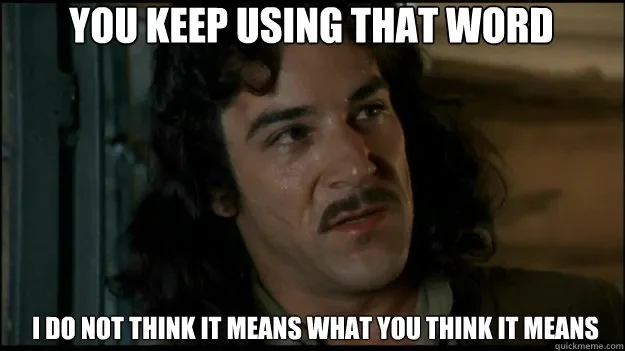
amoral v. immoral
Dale thought this idea of hierarchy in morals sounds like degrees of understanding, agreement, or disagreement. He thought it would be cool to have a party game. There could be different cards or ideas you have to rank. For the religious, you could have commandments, and then you'd have to rank which were the most important. You'd have to put them in order. And there could be another section where it has to do with clean water, greenhouse gases, and how the environment is treated. And it would be really interesting to see where people placed or ranked this wide variety of values. While others were making philosophical connections to Dale’s party game idea, I was over in my notes thinking how could we produce that game? Moral Hierarchy: The game. Brought to you by Philosofarian, inspired by Tonia, trademarked by Dale.
Dale was also thinking that it’s important to remember we're all flawed, and happiness only comes in understanding that you can't expect others to be perfect or be perfect yourself. So the role of tolerance comes into play for, what I think Dale was more or less saying, living the good life.
Seth thought that party game might be called the evolution of culture. The nature of values are never as pure as we'd like them to be. We constantly negotiate with the outside world and our own internal values. They're in flux because of our need to work through life. Our values are dynamic in ways we don't always like to think.
When You Are Your Relationships
Jane said this discussion was helping her understand that she always values community and flourishing and opportunities to help others come into their selves. This is a core orientation for her. And she was thinking that if she encountered someone who didn't value another's life and saw everything and everyone as expendable for their own good, she would fall into teacher or pastor or mediator role. Basically, she would try to get them to change. And putting that instinct aside, she had a hard time seeing why she would find or how she would find any value in spending time with someone whose morals were so at odds with her own. The thought that went through my head was Jane’s never going to make friends with a Klingon. Yep. I’m that nerd.
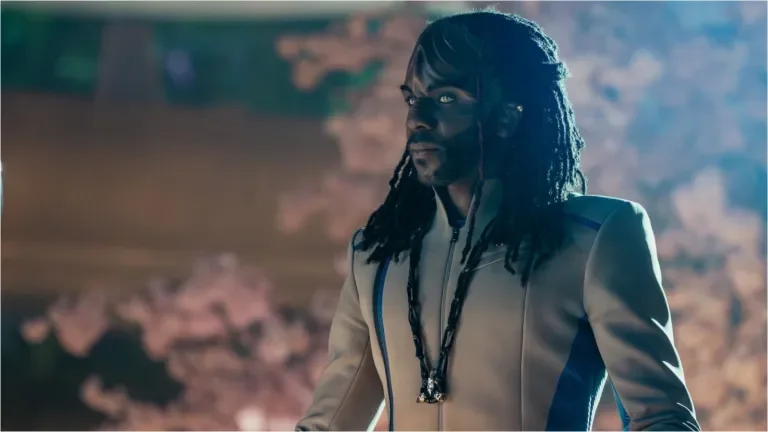
Maybe this Klingon. Jay-Den is a whole new vibe.
She continued musing. She could see how she was making the assumption that there's a freedom to make a choice, and many don't necessarily have that luxury. The conditions they live in may have created a situation where many don't even think to ask or question or even realize that a choice is available. Her mentioning this was interesting to me. Because there’s a way where turning this reasoning back on the values she holds dear could be said to be a luxury. Thinking about a moral identity in terms of class was actually a theme that wove through the conversation last night but we never looked at it directly in that light. I guess we could call that a little philosophical flirting. We were coy about classism.
Somehow she very, very smoothly worked in a reminder that KMUN is in the midst of one of their fundraising cycles right now, so everybody support community radio! This tied into her basic instinct of wanting community and building it up. And speaking of radio she also listens to conservative radio where she hears a lot of people regarding the other similar to a death cult. There's so much end-times talk about people who are different. It's a struggle for her to choose to give time to trying to find common ground.
Seth mentioned how sometimes moral values and systems can invert and become like an ouroboros that consumes and reduces itself to nothing to reinforce its own thinking.
Tim is more interested in looking at specific systems. He's studied quite a bit of the Judeo-Christian history and structures, and you can really sum up the heart of these values as "love thy neighbor as thyself." You can use that as an umbrella to cover most of the virtues within these systems.
Seth asked: what is the value of it? This virtue permeates through many cultures and religious systems. Why is it that something like "love your neighbor as yourself" works so well?
Tim thinks it has to do with what social creatures we are. That it's the foundation for compassion.
And Jane added that when she preaches on this idea, one of the saddest things is when people approach her afterwards because they don't love themselves. To treat their neighbor as themselves would be to actually treat their neighbors very badly.
This is where Lowell recalled something about Rawls' veil of ignorance and it seemed relevant to the conversation, but he couldn't quite remember the details. He asked Seth to tell us more about it.
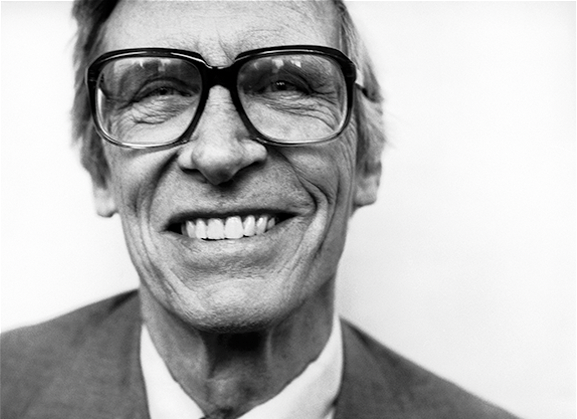
John Rawls
And wouldn’t you know, Seth had just the story.
His mentor, Frank Nelson, once traveled to Korea and came upon a student who was reading Rawls. And let me tell you, folks, Frank Nelson never met a stranger in his life. So he strikes up a conversation with the student, who turns out to be the student body president, a bright young man, very active in his community, who was working hard to understand Rawls better.
Frank unpacked the veil of ignorance for the student. Rawls thought we could get from justice to fairness if everyone forgot their background, their biases, their privileges, or misfortunes. From behind this veil, what Rawls calls the original position, we could begin to make decisions about practices in society that would be more just and rational.
The student venerated Frank for his brilliance and the beauty of the idea. And solemnly announced it would never work in Korea. It would never work because Korea is a Confucian society. You are your relationships. So, if you removed all of your knowledge of your relationships, you would cease to exist.
Seth went on to say he finds that some of the most interesting things happening in philosophy are when thinkers from different traditions around the world are in dialogue with each other, searching out common ground.
Imagine There's No Heaven (It's Easy If You Try)
This brought us to Kant. Tim saw that the categorical imperatives seemed to be non-hierarchical as well. His understanding was that it seems flat. Kant talks about many different details, but they're not organized in a hierarchy.
Seth explained that yes, there is a way that the categorical imperative is singular morally. The thing is, even though people recognize categorical imperatives, the categorical imperatives they recognize are not necessarily the same thing. So on one hand you can have an individual who has practiced proper rationality and with goodwill holds a categorical imperative, and then on the other hand you can have another individual who practices due diligence with rationality and goodwill and still arrives at a different categorical imperative. And the two are not necessarily interchangeable. They might even be contradictory to one another. But what we do in that case is recognize that, provided the other individual has been rational and is acting with goodwill, we respect their autonomy because we would expect them to respect our autonomy. From that, there isn't common ground and it's not flat. There's a lot of variation within it. What you have that brings things together is respect for autonomy and tolerance. (let me pause for a breath after that)
Seth also brought in that not every ethical structure has hierarchy. Early Buddhist ethics use the Pali/Sanskrit words punya and kusala. These are both words that roughly mean "good," but not as in virtuous. More like "it works" like "good job." And it's used as a moral position. When it's used effectively, it removes suffering, and that's skillful.
He was wondering if it was useful in the conversation. We could consider moral skill rather than hierarchy. The shortcoming in hierarchy is there's not really any answer we can ever depend on. The world is not static. It's always changing. And good requires effectiveness, not being right.
David pointed out that we all work within a society that already behaves like there's a hierarchy. We can just look at our justice system. There are degrees of crime and prosecution—anything from a misdemeanor to a felony. And then we bring in mitigating factors and motivation. Stealing for food and stealing for fun are not regarded as the same crime worthy of the same punishments. And he wondered what would society look like if there wasn't a hierarchy?
Seth thought Lennon and Osborne had something to say about that. So feel free to enjoy this brief musical interlude:
Back to the question of what if morality simply had to do with what's right here, what's right now? Seth saw it getting tricky because the way humans think, our consciousness almost immediately starts implying intentionality, and we start dealing with what doesn't exist. Hierarchy seems to be a byproduct of our intention-making consciousness.
Bob recalled a Scoundrels session years ago asking a similar question where he argued for the idea that there are universal morals. And he remembered being flabbergasted that the group at the table didn't share that idea. If the answer to the question "is there a hierarchy to morals?" is no, then what does it look like?
Jane offered: Utopia?
Tim says: No.
Bob asked: Is it?
To this, Seth talked about Marx and Engels and the end of history. And how in this way of thinking, everything is a byproduct of materialism. Dialectical materialism is this tension that goes back and forth, and the push forward is towards an end of history. But when that happens, everything would be morally flat. Everything would be equally distributed. And it's interesting because that would be a kind of utopia. And Seth reminded us: utopia meaning "nowhere."
Bob said, almost under his breath, "That assumes the material basis."
Look at those philosophical chops!
We're Killers Who Need to Bless Our Kills
Thom was thinking our conversation seemed to be limiting morals to humans, but the world is so much bigger. He admires the idea of blessing kills that provide food. We have to kill to survive whether it’s animal or plant. And he was chewing our moral structures that tell us to do no harm or thou shalt not kill, when humans fundamentally are killers. He went further than just survival that we will go quite far for our kids. There is killing in our nature. How do we deal with this contradiction in what we say is virtuous when it’s also impossible? Why do we hold this ethic when it’s fundamentally imaginary?
Seth said what Thom was referring to is called moral anthropocentrism. It can be a useful frame for talking about morality. But it certainly shortchanges the principle that a human has to be in the world, and we're not in it on our own terms. We are here on and in the world's terms. What makes morality flourish is when it finds ways to resonate out.
Imperial Posturing or the Most Interesting Work in Philosophy?
Bob thought: finding common ground, what does that even mean? That's just imperial history. History argues against that being possible. We hear about one politician negotiating with another to end war and it's all a lie. Each is just looking for an advantage. Hierarchy is just natural. We can't communism our way out. The world is naturally stratified. It's all just a bunch of posturing and politics, always looking for a position to dominate in spite of its impossibility.
People are naturally driven to impose structures and systems on others. A lot of philosophers talk about this—Hobbes, Nietzsche, Confucius. Even when we're asserting dominance, we find ways to co-opt and absorb the other. And the thing about it is the very act of domination results in transformation because of the absorption.
That's the note Seth left us on at 7:03pm.
Buns Still in the Oven
There's always more:
Is water a right or a resource? Does AI change how we value it?
How exactly could we produce this party game of Dale’s and make it fun?
What can we learn from moral frameworks that become death cults?
Can you be moral toward yourself if you don't love yourself? Can you be moral to others?
Are the Knicks and boiling bagels amoral concerns, or are they just human-scaled morality?
Is it possible to live moral free?
What We Know We Don't Know
Tonia asked if we could get better at identifying where we depart. There are so many examples where values create tension and disagreement: fairness versus kindness, autonomy versus community, skillfulness versus rightness. Dale wanted a party game. The Korean student knowing without our relationships we cease to exist.
Maybe hierarchy is natural. Maybe it's just how our intention-making consciousness works. Maybe Buddhist skillfulness offers another way. Maybe Dale's right that we can't expect perfection and tolerance is the path to the good life. Maybe Tim's right that everyone has a system, even if it's inscrutable to us.
Maybe moral anthropocentrism shortchanges the world. Maybe we're killers who need to bless our kills. Maybe the ouroboros consumes itself trying to reinforce its own thinking.
Maybe finding common ground is imperial posturing. Maybe it's the most interesting work happening in philosophy right now with thinkers from different traditions trying to build thinking through and with their differences.
Maybe utopia means nowhere for a reason.
Maybe metaethics squared is as far as we can go before we disappear into our own questions.
Next week at Scoundrels: How accurate can language be? Wednesday at 5:30pm, Bridge and Tunnel Bottle Shop. Bring your tolerance. Bring your questions. Bring your inherent killerdom and your blessing practices.
Come think with us.
