
Scoundrels Discussion — 04.08.02026
This topic came from an AEON article about psychopathy being a zombie concept—an idea the field of psychology holds onto despite being unable to reproduce any results about psychopathy or even come to any agreed-upon definition. When I told Asha this, her head almost exploded. She had no idea. And honestly, we never even touched on Zombie ideas persisting, because we don’t even know they’re Zombies (they live!). Dear lord, how did I not bring up the movie “They Live?” Proof writing helps thinking develop, right here and now ladies and gentlemen.
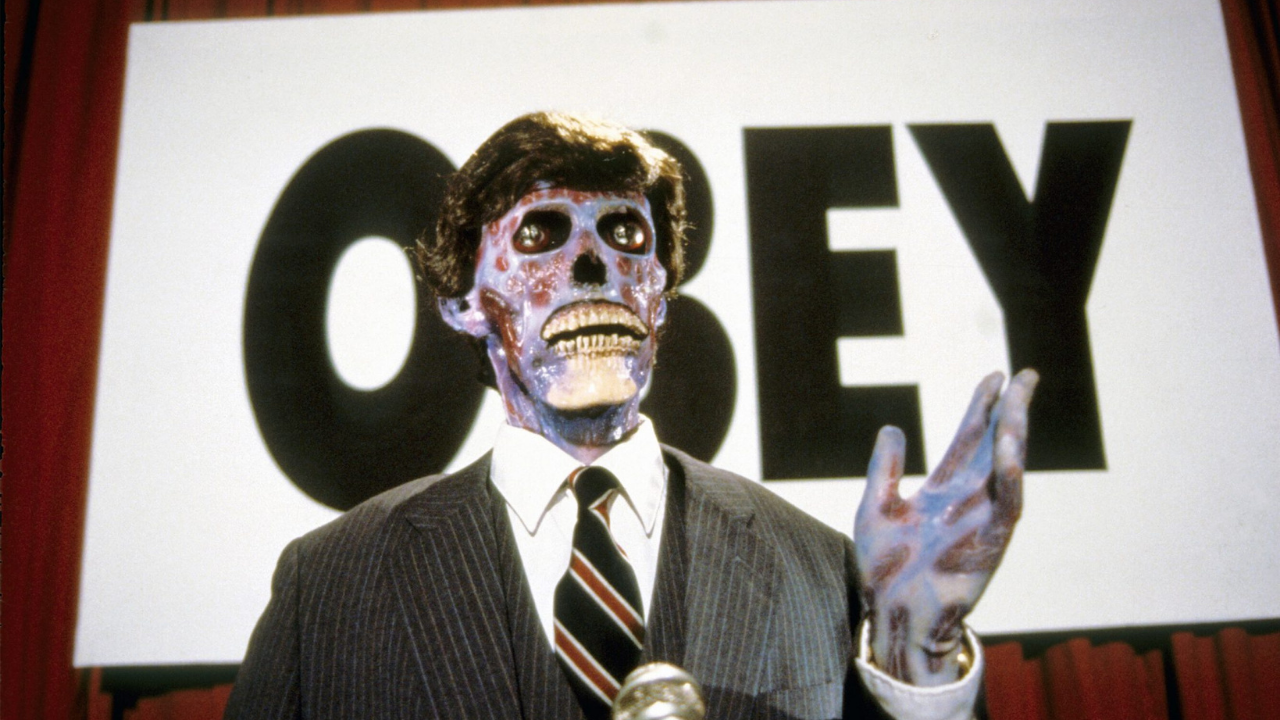
Last night at Scoundrels, we talked about why we hold on to zombie ideas.
Seth's proposed two different ways we could do this. Option one: we could talk about zombies, the brain-eating kind, if that's what the group really wanted. Option two was his preference. We could talk about ideas that have been disproven and we still invest in them.
The group went with option two. (I was kind of surprised NO ONE took the opening to think philosophically about zombies. I'm personally fascinated with how the monster du jour reflects society's fears of the time—what they say about the zeitgeist. The '90s were all about vampires. The aughts and teens were dominated by zombies. Frankenstein seems to be coming up more frequently now. But even more interesting: horror movies have become mainstream, produced year-round. I suppose I'm fascinated with how collective fear manifests artistically. But that's popcorn for a different day.)
Seth used the word "epistemic" a lot throughout this session, so we should probably talk about what epistemic means. I've been falling away from the definitions a little, but one of the big things we try to do is to be welcoming and rigorous. So epistemology is a branch of philosophy that deals with how we know things, anything, what’s the process, the method, how do we know we know. When Seth talks about epistemic reasons, he's referring to, very loosely speaking, reasons that have to do with knowledge rather than, say, feelings or spirituality.
Seth continued his zombie ideas kickoff: sometimes we hold on to them in spite of evidence otherwise. So they are not being held onto for epistemic reasons. If it's not epistemic, not for knowledge purposes, then what is it? Is it for belief? Is it too hard to change? Do we hold on to the ideas because they have a new set of uses, like a ritual. Do they have a different function or purpose than they previously did? The thing is, sometimes we know that these zombie ideas are wrong or a problem. So why don't we care about the damage that they can do? Are they just placeholders?
What do you guys think?
Why We Don't Let Go
Tim waved his hand wildly from the back row and referenced what I'm growing to understand is one of his favorite quotes, or at least a particularly useful one for him. Upton Sinclair's quote: "It is difficult to get a man to understand something when his salary depends on him not understanding it." And then he related seeing this in the MAGA movement.
Thom asked what MAGA had to do with it. What's the relationship or the connection that Tim was making?
Tim talked about how one has to believe in election fraud in order to stay part of the group, it’s required for membership at this point.
Seth said that in political terms, zombie ideas work when belief is more important than separation. The belief between rational reasons and ideological reasons function differently. And the more tension there is between a rationale and an ideology the tighter the two are held together, until the relationship between the rational and the ideological shatter completely. We see that happening in the history of politics.
Now, I want to pause here for a second. Even in our group, there's an assumption that because we're all there thinking together, it also means we share political views. And I know that's not the case. I feel confident we had people in the conversation that night that voted for Trump. And this is very much akin to what Jake brought up later, we don't always know someone disagrees with us just because they didn't dispute or confront. Sometimes people are just getting along.
Asha was thinking zombie ideas continue because of laziness. Memes, for example, spread from point A to point B without much effort. They use heuristics, shortcuts in thinking, and it's easy. A meme is a heuristic.And then she pointed out how many things she learned as a kid that simply don't apply anymore but still survive in the world today, like putting butter on a burn. And then the group jumped in with all kinds of things that we learned as kids, little sayings or advice that aren't really true but everybody knows.
Heuristics are ideas that are not taken critically; that's precisely where their usefulness is.
Jake spoke up, welcome Jake! Long-time Seth knower, first-time Scoundrel philosophy clubber! Jake works in construction. He is not surrounded by people who see and think about the world the way he does. It’s hard for him to find people who share his values in that environment. He finds himself in the homes of people with crazy ideas, racist ideas, political ideas that are out there. And he's in their home. He's there to work.
Asha wanted to know if he considered racist ideas zombie ideas.
He said yeah. He shared experiences of being in homes with old racists and others who think the president has never done anything wrong, it's hard for people to break away and look at themselves and acknowledge that they're not always right.
Seth asked, why does it feel like they need to be right?
Jake said why do they get so angry? Well, sometimes it's because they're so drunk, because often that’s when people talk about their ideas, their thoughts—but more importantly, he thinks it's because they don't want to feel stupid. And it's hard not to feel stupid when you have to come to terms with the fact that you're not always right.
David brought in how important the feelings are with zombie ideas. Our ego will defend itself. People relate too strongly to their own ideas. When you show somebody that they're wrong, you'd hope that it would just change their minds, but it doesn't. It often messes with their identity or ego.
Jane saw that not confronting or simply not acknowledging disagreement with an idea is what we used to call getting along. Rather than expressing yourself and your own ideas, you express curiosity about somebody else's. It's part of the human condition. Reading the environment.
Jane saw the flip side of workers expressing their unsolicited ideas. She has hired many workers to take care of her home. At one point, somebody told her a huge story about Jehovah's Witnesses and how it was a cult. This wasn't a “conversation” (read: monologue) that she wanted to engage in at all. She thought it brought up an interesting question: in social situations, who reports on who? The power can shift right under our feet.
When Knowledge Gets Shallow
Seth talked about how every generation is always talking about "kids these days," but there's something else that he's noticed that seems different than previous generations. Knowledge is becoming shallower and more fragmented. It's not connected to anything.
I’ve seen this with our kid, where he has knowledge, he's aware of all kinds of movies and phrases from the '80s, but he's never actually seen the movies or understood what the plotlines are. He might recognize "I'll be back" but doesn't know that it's from The Terminator and Arnold Schwarzenegger said it. The other day he glanced at a picture of Rick Moranis and asked if I was watching Honey I Shrunk the Kids. I was surprised and asked if he’d seen it. Nope. But he’s seen the cover.

Yeah. Today, with the way that we use the internet to find knowledge and having access to so much, it's hard to put everything together.
Lowell is a retired teacher, and his experience has been that youth are more informed, better informed, and better writers—more so in high school than college. Seth agreed that he saw that especially in elite high schools and saw a connection to increasingly generous resources for youth with privilege. But he saw that it was getting worse for everyone else. He thought about how he used to teach what was called night school, once a week for a few hours, and he watched the loss of the ability to write happen over the decades. Lowell on the other hand was teaching in the barrio.
Along these lines, Tim was recently speaking at a local school with the science students, and he was shocked at their inability to engage in meaningfully complex ideas. He sees the internet and AI as a place where people can now find support for any crazy idea they want to find support for. Further today's technology makes it even harder to recognize what is valid or true than it used to be.
For example, in his profession, when a paper comes out or a study comes out, it gets put in the arXiv (pronounced archive). This is a way to get your papers out before they're reviewed. The review process takes a while. It helps get credit for your ideas and stuff like that. But there was a study—an obviously bogus study, so bogus that the USS Enterprise was referenced and the introduction to the paper said, “this entire paper is made up.” The paper named a phenomenon "bixonomania," a condition that results from too much blue light. This is an obviously bogus paper to the users of the arXiv, but not to AI or to people who are using AI as an authoritative source of information. This went so far that a paper published in Nature referenced bixonomania and the bogus article. Nature is a leading science journal. It's kind of a big deal. So, Tim pointed out it's increasingly easy to insert zombie ideas into the zeitgeist and increasingly difficult to inoculate against this insertion. Also, fresh zombie ideas are easy to produce now. Zombie ideas don’t have to be old and disproven. They can simply be wrong from the start on purpose.

David brought up one of his favorite sci-fi sub-genres, SCP. SCP is an acronym for Secure, Contain, and Protect. There are a variety of hazard types. An information hazard would be discovering you can make a nuclear bomb out of the stuff you've got in your kitchen. David wanted to look specifically at cognito hazards, where the very thinking of the idea damages you as you think about it. This is almost like Cthulhu—it could cause mental illness or death just the mere act of the thought is a cognito hazard. He was wondering if perhaps some of these cognito hazards were at play in our media today and that large language models seem to be stepping on the gas.
Seth was fascinated with the cognito hazards. If it’s possible to accelerate belief, then it can feel perilous to think. Accepting zombie ideas is not necessarily a case of belief or trust. It's just a thing, a recursive idea. The thing is you need them or your worldview doesn't work anymore. One of the perennial questions that Seth as a philosopher returns to is: what is it to be wise? And what is it to be wise in modern life, within a post-truth, post-trust society.
Capitalism as the Zombie in the Room
Jim brought up Capitalism as a Zombie idea pretty early in the conversation. He said that our economic idea of capitalism is not shared everywhere, even though we seem to presume it as a functional, even inevitable or natural state in our country. This is an idea the group kept circling back to. Much to Jim’s surprise. He thought he was dropping a little reflection nugget and it turned out to guide the wondering of the group for the evening. You just never know what’s gonna catch the fancy of a bunch of Scoundrels.
Jane brought up The Jungle being used by the cannery workers here in Astoria in late '60s. Those workers went down to Los Angeles in 1968. They focused on The Jungle because it justified their bargaining position. Many of the cannery workers had the same types of injuries as the manufacturing workers in the book. So she was thinking that when we look at old ideas, part of why they continue to live on is they provide common ground. There is value in being able to share something. And as time goes on, the ideas themselves never really die. Sometimes they're just waiting in the ground until they can be useful. It is common ground, a shared idea, regardless of whether it is or isn’t disproven that people can come together around. I didn’t think of it at the time, but writing about it, I see a kind of musicality to looking at zombie ideas this way. The sharing and resonating transcends any particular meaning.
Lowell wanted to know more about Jim’s Zombie Capitalism idea.
Jim said, well, it relies on a means of production and we see corporations that value the producing of products (and the selling of them) more than taking care of the people that make the production possible. They make it possible because it’s their work and also their demand that has to sustain the goal of accumulating wealth. And if the people who make the products aren't taken care of, then the demand for the products will diminish (because they are the same people). So it's a weird old idea that we would lift up the means of production to such an extent that the people who produce as well as buy the products could no longer buy the products.
Lowell said he sees zombie capitalism as destined to fail. There was a green book cover from the 19th century. It features a bourgeois factory owner and how unsustainable the economic model is ultimately.
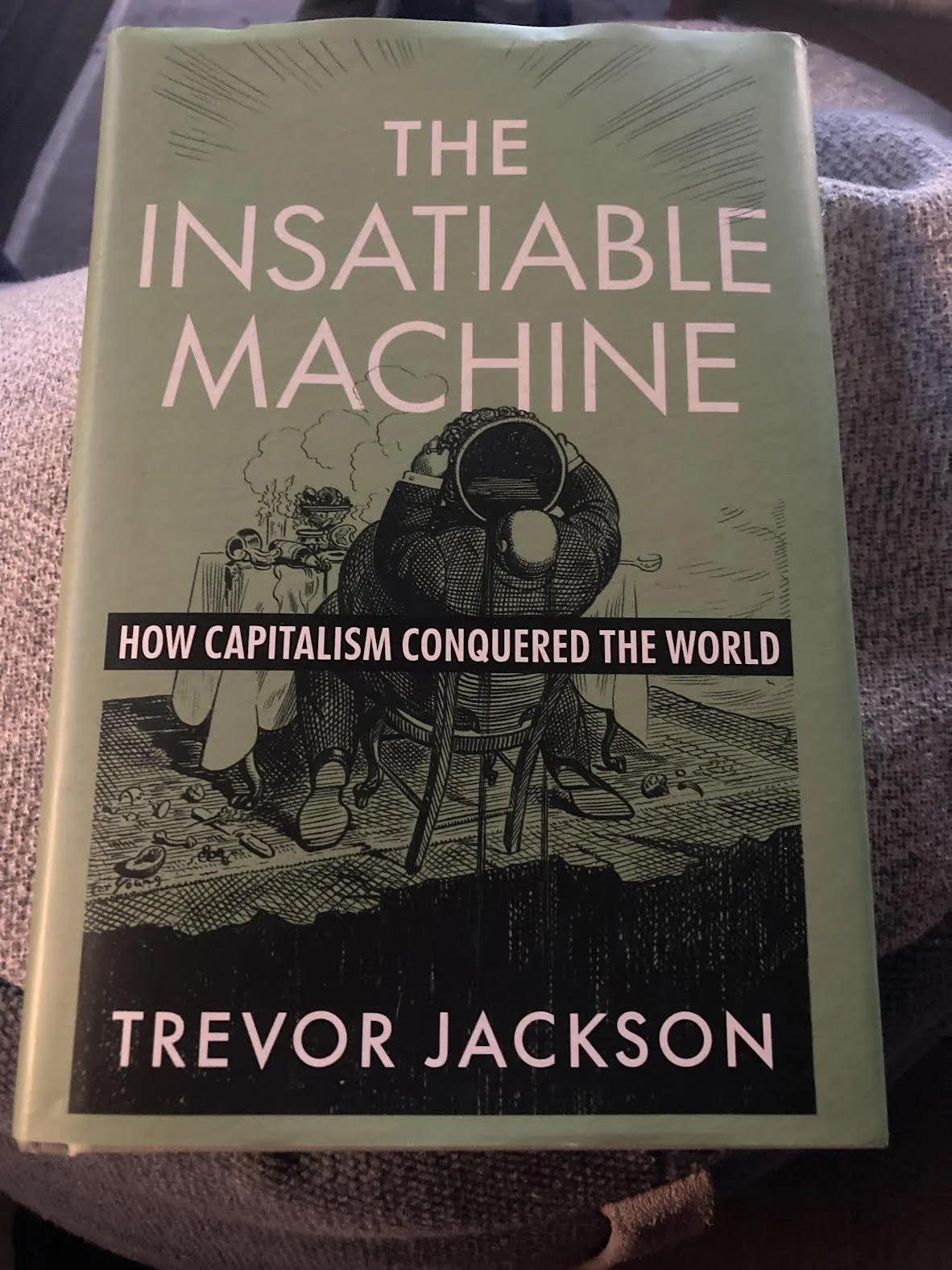
Jim said we're valuing what won't sustain us. We're bombing for oil. We're not valuing people.
Jake added it's weird that the human population is going down, but we still want the money to keep going up. If the expectation is that wealth must increase, at a certain point we’re looking at an increasingly upward price spiral. That can only make quality of life worse for many, many people.
Seth saw an opportunity. The group was exploring ideas that have names. So he unpacked a little of Marx critiques of capitalism. While that’s what he did. Honestly, I didn’t take notes on how exactly he said it. So what you get here is the Gadian breakdown of a couple Marx terms.
Exploitation
The only way to accumulate wealth is through exploitation. Someone must accept less than the actual value of their work in order for wealth to build up. Conversely, someone must extract more from a system than they put in for the wealth to build as well. Without exploitation, there is only fair exchange, in which case there is no accumulation, only flow. The group has been talking about this idea without using the specific term. We’ve been talking about how the exploitation has become more extreme.
Alienation
Capitalism divorces workers from several essential aspects of their humanity. It separates them from what they make, from the work they do, from each other, and from their own human nature. Marx saw our work as fundamental to the creative beings that we are. So what we make is an extension of our humanity, the work we do is an expression of what it is to be humans generating, so when we separate the idea of our labor from ourselves terrible (alienation) things happen. When we get separated from what we make and do we get twisted and suppressed as humans. We become isolated from each other and deeply lonely because we are separated from our work (of humaning), and it’s compounded with the idea that someone else could own parts of us.
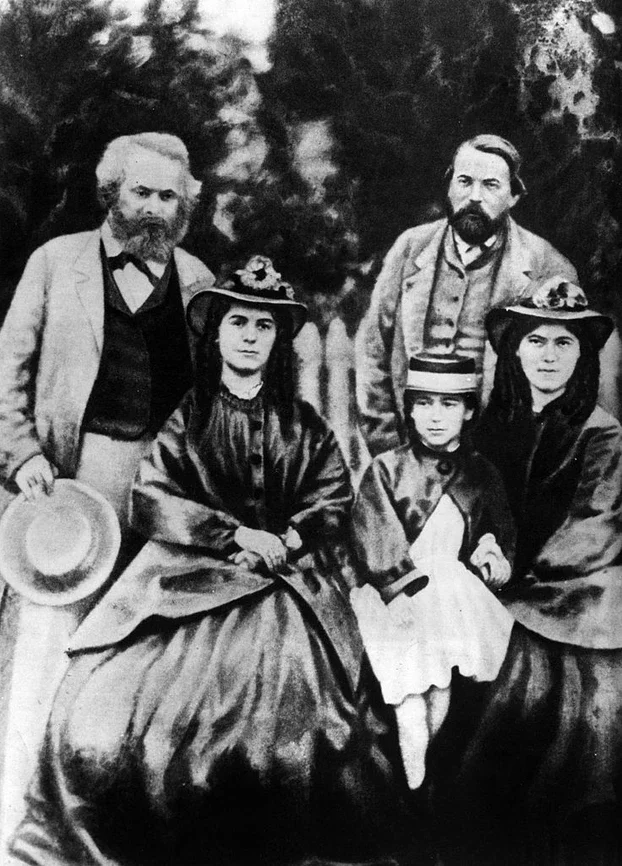
Marx with his tight knit family and Engels (part of the fam)
Now, back to our regularly scheduled Sethification. The problem is the same as the sun's problem, because ultimately the sun burns up all of the hydrogen and will no longer be the shining sun we know. In the same way, the production of wealth is destabilizing. We start to hold on to zombie ideas because they sustain the system by making us blind to the corrections possible.
Seth also considered aloud when we think of how people make wrong turns intellectually, maybe it pays—maybe it's a kind of tribal authority rather than just a mental shortcut (heuristic). One thing comes to mind for Seth: this is not just a capitalism idea, it's modern society. We are immersed in systems, products, tools, in an environment that we don't fully understand. This is the convenience of modern society. We live in houses we might not know how to build. We have utilities that we don't completely understand. How does the internet work? Why is it that electricity functions the way that it does? How come that toilet bowl cleaner works better than another? We are surrounded by a life and environment in which we do not and cannot completely comprehend. And so our way of living requires heuristics that we must deal with every day.
Religion, Tribalism, and Teaching the Wrong Things
Jon couldn't believe he beat Jane to asking this question, but he was curious about zombie ideas in relation to the various religions of the world.
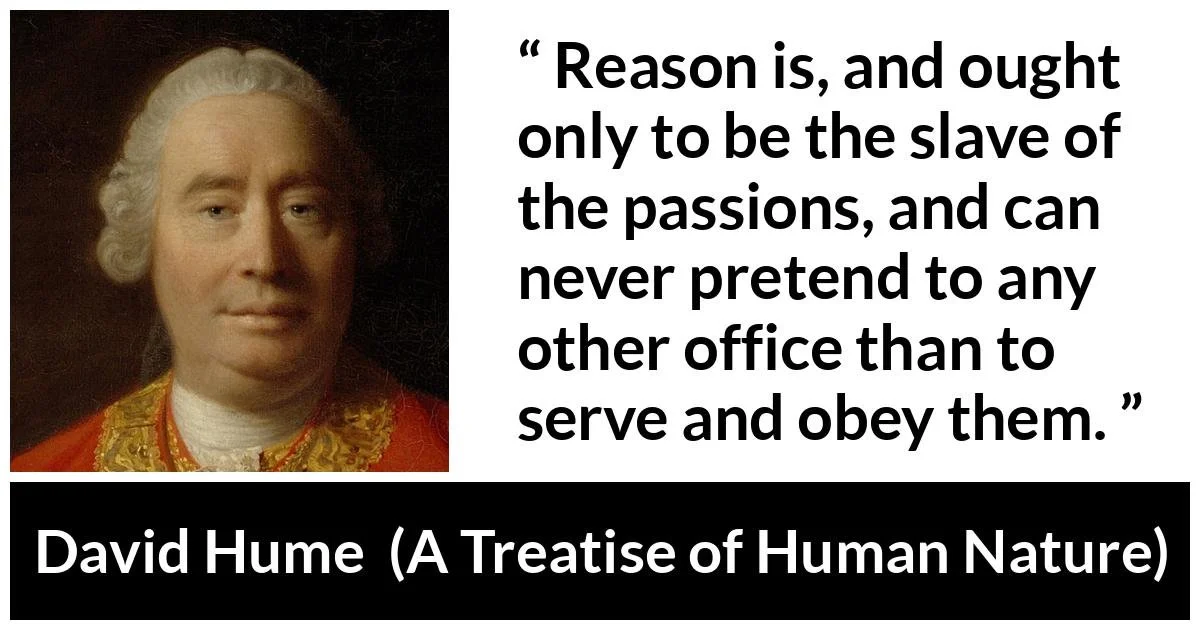
Seth brought in Hume looking at religion and the problem of religions being right or wrong, especially given that so many religions hold central to their structure that they are the one true religion. And if that's the case, then the vast majority of religions must logically be wrong. Hume’s take on zombie ideas is that they have nothing to do with epistemic reasoning. Instead they have more to do with tribalism, ritual, and conduct. His point of view is that there's such a huge portion of the world that has to do with opinion and perspective; there's so much to know, it’s not possible for reason to achieve everything that you would want it to achieve. It's almost inevitable that reason becomes a slave to passion.
Lowell brought up how economic textbooks zombie ideas. He brought up Paul Krugman using the term "zombie ideas" in reference to trickle down economics. He wonders what's behind perpetuating these ideas. Why keep foisting terrible economic ideas on kids? People are leaning on what they're taught, so these old ideas get perpetuated. When he was teaching before the Cold War, he knows he was teaching things that were not the case because it was just what was thought to be the case at the time. And then post-Cold War, there was a huge flow of information that came out. He recalls the feeling of wanting to call students back and say, "Hey, wait a minute, that's not right. I'm sorry, but we seem to have a vested interest in capitalist ideology."
Tim added to Lowell's point where he saw that there are purse strings of religion, purse strings of capitalism. All of it needs oversight. Tim believes socialism leads to totalitarianism, but regulated capitalism works. That's not what we're currently using, but it does work in other parts of the world.
Seth saw most civilizations have some form of idea that's larger than the party line. Everyone comes with a basic line of thinking. Beliefs don't have to do with truth or insight. Social organization is the goal. Powers care about people holding ideas that allow generally helpful behavior for the powers that be. Graeber points out ideas are made up because we can tell—because other non-literate systems don't work this way. The zombie ideas organize large swaths to anticipate. Nothing in the human mind actually requires this kind of organization. Humans are always curious and creative.
Hope, Letting Go, and What Pete Would Say
Jane thinks that hope is eternal. That zombie ideas come from hope. Here's a fresh batch of youth. And how long is an idea waiting underground to be rediscovered or reborn for the next generation? Americans hope old foundations will find meaning in today's world. But this can be dangerous when systems replace. Jane thinks we need to revisit our foundations.
Lowell brought up an Atlantic article about General McChrystal and a painting of Robert E. Lee that he received as a wedding gift and how McChrystal came to understand that his thinking on the South was warped. And that ultimately led to him throwing away this picture. The ideas that were wrapped up in his understanding of Robert E. Lee and the South ultimately got him fired for insubordination. And so Lowell wondered how did he come to that epiphany? Because it seems like he was holding on to what we'd call a zombie idea for decades, but something shifted for him.
Thom wanted to know where morality fit into all of this.
Seth gave the mini recap on descriptive, normative, and metaethics. Peep it here in the heirarchy of morality discussion a few weeks ago. Then said that descriptive and normative ethics get wrapped up in the ideas or zombie ideas of any current era. Whereas, metaethics looks at the fundamental conditions that give rise to the nature or right, wrong, good, or bad. So ultimately, there’s a variety of ways in which morality could fit into wondering about zombie ideas.
Ahsha said Pete really wanted to be here tonight because he looked at the question through the lens of personal experience. Pete reflected how frequently his kids saw his ideas as outdated. They think his ideas are zombies and that the morality associated with them is also outdated. There’s a little of that morality weave for Thom to chew on. Ethics do seem to be shaping up as one of Thom’s areas of interest.
What we know we don’t know
Maybe zombie ideas persist because of laziness, heuristics, not wanting to feel stupid. Maybe they persist because our salary depends on not understanding. Maybe they persist because they provide common ground, even when disproven. Maybe they persist because reason becomes a slave to passion, or because false consciousness sustains the system, or because we're surrounded by a world we can't fully comprehend and heuristics are how we survive.
Maybe AI is stepping on the gas, making it easier to insert bixonomania into Nature journals and cognito hazards into our feeds. Maybe modern knowledge is getting shallower, more fragmented, disconnected from anything whole.
Maybe Jake can't confront the racist in whose house he's working because he needs to get paid. Maybe that’s been the spectre of racism since the beginning. Maybe Jane can't escape the Jehovah's Witness lecture from the contractor in her home. Maybe getting along is just reading the environment. Maybe we're all just trying not to feel stupid.
Maybe capitalism is the zombie idea we can't let go of because we live inside it. Maybe it's destined to fail like the bourgeois factory owner falling off a cliff. Maybe the population is going down but the money must keep going up. Maybe we're valuing what won't sustain us.
Maybe zombie ideas come from hope—waiting in the common ground to be useful again. Maybe a general removing the pedestal of another is a different kind of hope. Maybe we need to revisit our foundations.
Maybe Seth isn’t alone in wondering what it means to be wise in a post-truth, post-trust society over and over again.
Welcome, Jake. Glad you're here. Shout out to Cindy with enough social battery to be a Scoundrel tonight.
